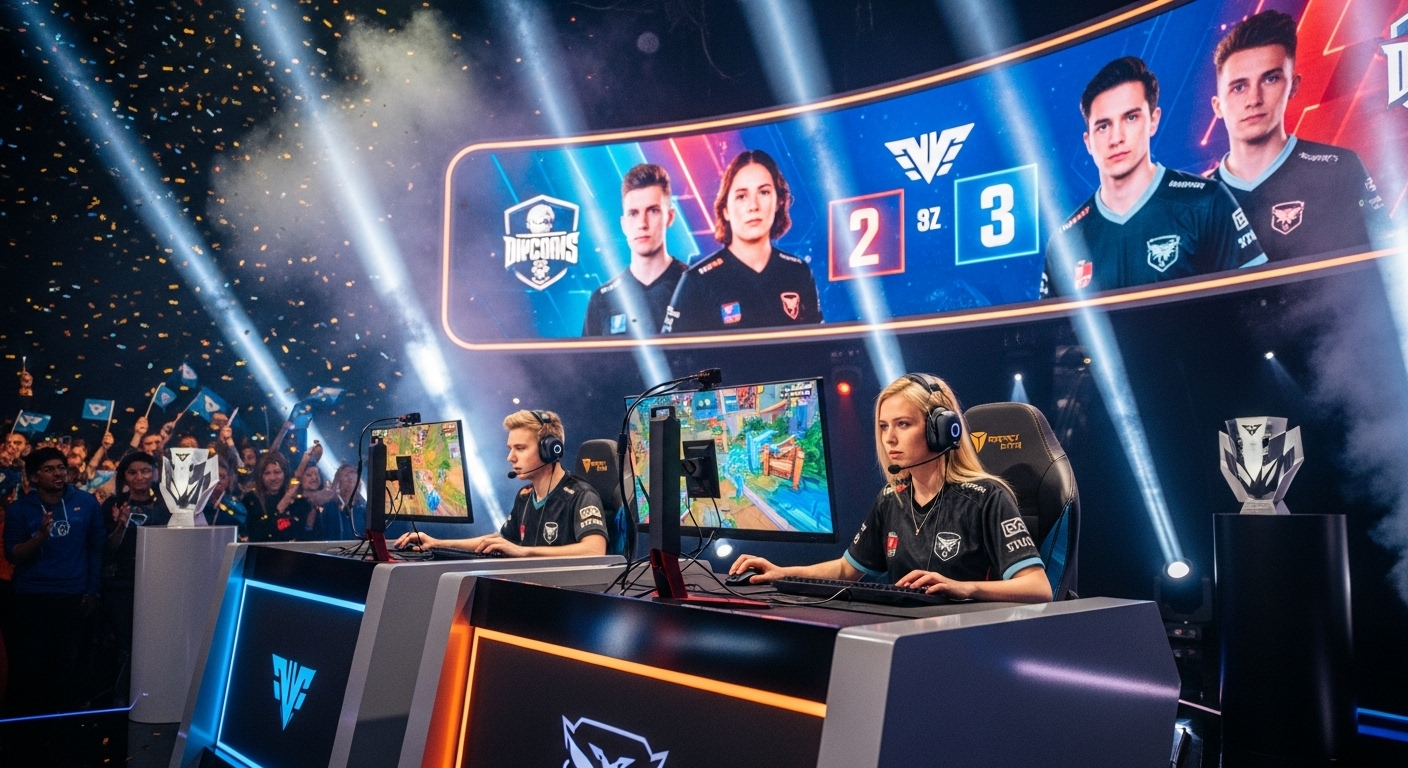
In recent years, esports has grown from a niche hobby to a mainstream entertainment juggernaut. Competitive gaming now draws millions of viewers, attracts sponsorships from Fortune 500 companies, and offers players lucrative careers. This digital sport has transformed how we think about gaming, pushing it beyond the confines of just play and into the realm of professional competition. But what exactly is driving the rise of esports, and where is it heading? In this blog post, we’ll explore the evolution of esports, its current state, and why it continues to capture the hearts and minds of millions worldwide.
From Casual Play to Organized Competition
Esports did not simply spring up overnight; its roots lie in the earliest days of competitive gaming. In the 1990s, LAN (Local Area Network) parties brought gamers together to compete against one another in titles like Quake and StarCraft. These small gatherings, often held in basements and dorm rooms, were the early foundations of what would eventually evolve into a worldwide competitive ecosystem. The 1997 Red Annihilation tournament for Quake is often cited as one of the first major milestones in esports history, where players not only competed for fame but also for a Ferrari as a grand prize.
As the internet became faster and more accessible, online competitions started to gain traction. By the early 2000s, esports began to take on a more professional tone. Games like Warcraft III and Counter-Strike led the charge, with professional teams emerging and tournaments becoming more organized. These early leagues set the stage for what would eventually become a multi-billion-dollar industry.
The Explosion of Global Esports
By the 2010s, esports had evolved into a global spectacle, attracting millions of viewers from around the world. Games like League of Legends and Dota 2 spearheaded this transformation, drawing in massive audiences both in person and online. The League of Legends World Championship, for example, has become one of the largest esports events, filling arenas and breaking viewership records. Major events like The International for Dota 2 have become annual milestones in the world of competitive gaming, with prize pools often reaching tens of millions of dollars.
Esports’ expansion has not been limited to just the games themselves but also to the professional infrastructure surrounding them. Teams such as Cloud9, Team Liquid, and FaZe Clan have become household names, signing sponsorship deals with brands like Coca-Cola, Intel, and Nike. These organizations operate much like traditional sports teams, with rosters, coaching staff, and even nutritionists to ensure players perform at their best. Esports players, too, have become celebrities in their own right, gaining followers on platforms like Twitch and YouTube, and even attracting endorsement deals from global brands.
Why Esports is Gaining Such Popularity
The rise of esports can be attributed to several key factors, each playing a significant role in its rapid growth.
1. Accessibility of Gaming
Unlike traditional sports, which require physical space, equipment, and teams, esports is incredibly accessible. All a person needs is a computer or a console and an internet connection to participate. This makes it possible for millions of people worldwide to engage in competitive gaming, whether they’re playing casually or aiming for the professional scene. Mobile gaming, in particular, has added another layer of accessibility, allowing people to compete at the highest level using just their smartphones.
2. The Thrill of Competition
Esports taps into the universal human desire to compete. Whether it’s the rush of victory or the desire to prove oneself against others, the competitive aspect of gaming is deeply appealing. Games like Fortnite, Overwatch, and Valorant combine strategy, skill, and quick reflexes, offering players an adrenaline-fueled experience. For spectators, watching top-level players outplay each other is as thrilling as any traditional sport.
3. Engagement Through Streaming
Streaming platforms like Twitch and YouTube Gaming have changed how people consume esports. Fans can now watch their favorite players live, interact with them in real-time through chats, and even learn new strategies by watching gameplay. Streaming has allowed esports to grow beyond physical tournaments, enabling fans to engage with the content at any time, from anywhere. This continuous interaction between players and fans fosters a sense of community, with viewers feeling like they are part of the action.
4. Entertainment Value
Esports events have become more than just competitions—they are spectacles. Professional leagues and tournaments have adopted formats similar to traditional sports broadcasts, complete with live commentary, player interviews, and analysis of strategies. Large arenas filled with fans create an electrifying atmosphere, and the production value of these events rivals that of major sporting events. For many viewers, esports offers a form of entertainment that combines the excitement of sports with the passion of gaming.
Esports and Traditional Sports: A New Era of Competition
One of the most intriguing developments in esports is its intersection with traditional sports. As esports has gained legitimacy, major sports organizations have taken notice. NBA teams, such as the Sacramento Kings and Philadelphia 76ers, have invested in esports teams, while NFL franchises like the Dallas Cowboys and New England Patriots have launched their own esports initiatives. In some cases, players from traditional sports have even dabbled in competitive gaming, either as investors or participants.
This crossover between esports and traditional sports has led to the creation of esports leagues that mirror the structure of traditional sporting competitions. For example, the Overwatch League operates similarly to the NBA or NFL, with teams representing cities around the world, competing in regular seasons, and culminating in a grand championship. This model has helped esports gain a sense of legitimacy and has paved the way for more professionalization across the industry.
The Future of Esports: Expanding Boundaries
The future of esports looks brighter than ever. As technology continues to evolve, so will the possibilities for competitive gaming. Virtual reality (VR) and augmented reality (AR) are expected to play a significant role in the next phase of esports, offering even more immersive experiences for both players and viewers. Imagine participating in or watching an esports tournament where players use VR headsets to compete in fully immersive environments—this may soon become a reality.
Mobile esports will continue to rise as well, with games like PUBG Mobile and Clash Royale proving that competitive gaming doesn’t require a high-powered PC. With the widespread adoption of smartphones, mobile gaming could become the most accessible form of esports, especially in regions where high-end gaming equipment is not as common.
As esports grows, so too will its global footprint. Countries across Southeast Asia, Europe, and Latin America are embracing esports, and emerging markets are creating new opportunities for players and teams. With esports continuing to expand across the globe, it’s clear that the future of competitive gaming is one of endless possibilities.
Conclusion: Esports is Here to Stay
Esports has firmly established itself as more than just a hobby or a passing trend. It has become a global entertainment phenomenon that rivals traditional sports in terms of viewership, revenue, and cultural significance. The combination of accessibility, competition, and entertainment value has helped esports attract millions of fans worldwide, and the future of this industry looks incredibly promising.
As esports continues to evolve, it will remain at the forefront of innovation in gaming, technology, and entertainment. Whether you’re a player, a fan, or someone just beginning to explore the world of esports, there’s no denying that this digital revolution is reshaping how we perceive competition and entertainment in the modern world.