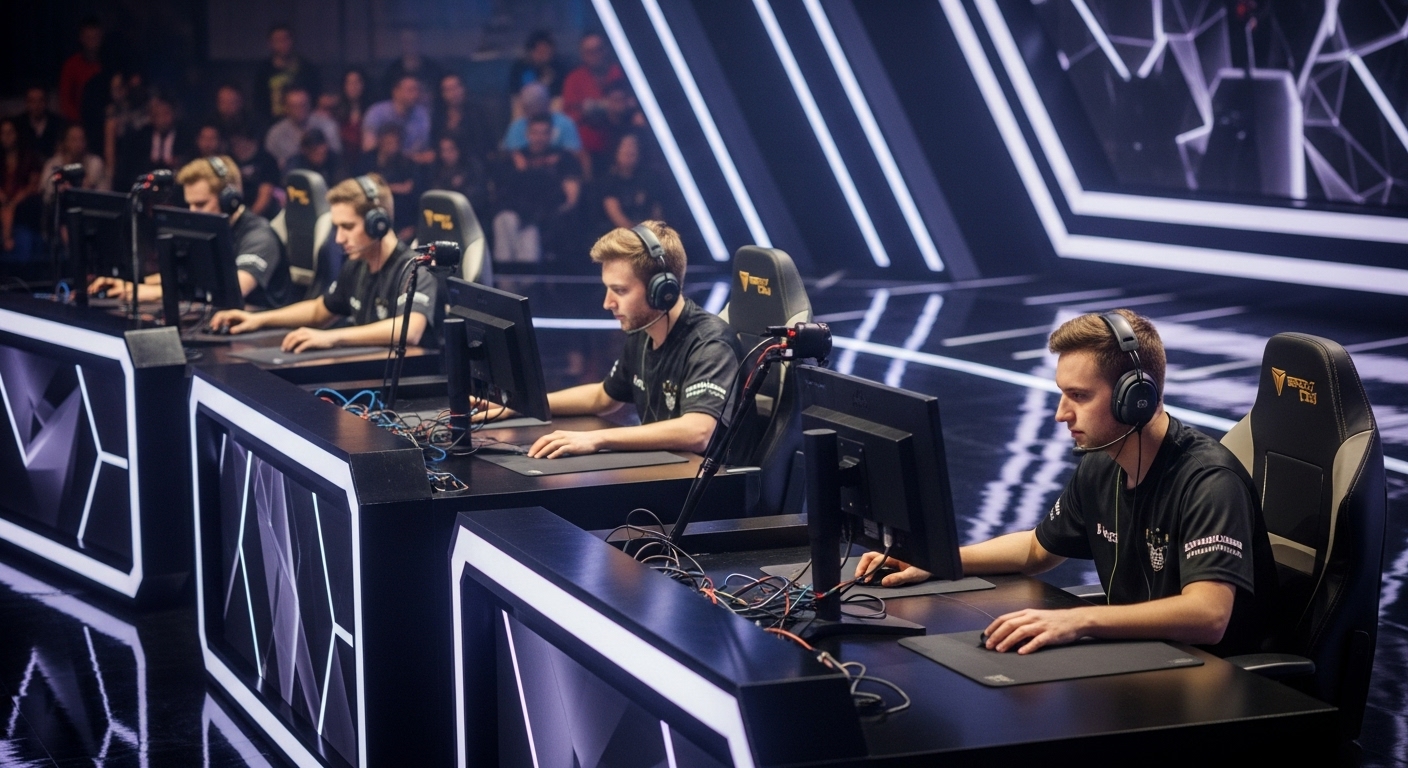
Esports, short for electronic sports, has rapidly transformed from a niche subculture to a global phenomenon. What was once just a pastime for passionate gamers has evolved into a billion-dollar industry, captivating millions of viewers worldwide. Today, esports is not just about playing games but has become a legitimate profession, complete with sponsorships, celebrity athletes, major tournaments, and dedicated fanbases. In this blog post, we’ll explore the incredible rise of esports, its impact on the gaming community, and why it’s poised for even greater success in the years to come.
The Birth of Esports
The roots of esports can be traced back to the 1970s when video games were first becoming popular. Although the concept of competitive gaming wasn’t yet fully realized, games like Spacewar! were played at universities and research institutions, often in informal tournaments. However, it was not until the 1990s that organized competitive gaming events began to take shape.
The launch of Doom and Warcraft ushered in a new era for gaming, with players from around the world connecting over local area networks (LANs) to battle against each other. It was during this time that the term “esports” began to emerge, as competitions were organized to crown the best players in games like Quake and Street Fighter II. These early tournaments were the first steps in building what would eventually become the massive esports industry we know today.
The true breakthrough came in 1997 with the Red Annihilation Tournament, a Quake tournament where the winner, John “Fatal1ty” Wendel, took home a prize that included a Ferrari. Fatal1ty would go on to become one of the first professional esports players, setting the stage for competitive gaming to become a viable career.
The Explosion of Esports in the 2000s
By the early 2000s, esports was growing at a rapid pace, primarily fueled by games like StarCraft, Warcraft III, and Counter-Strike. These games were well-suited to competitive play, featuring strategic depth, team-based dynamics, and skill-based mechanics that made them perfect for tournaments. The establishment of major esports organizations, such as The World Cyber Games (WCG) and The Electronic Sports World Cup (ESWC), helped solidify esports as a legitimate competitive pursuit.
One of the key turning points in esports history was the rise of streaming platforms. In 2007, the launch of Twitch allowed gamers to live-stream their gameplay, which created a new level of engagement for fans. Esports tournaments were broadcast live on these platforms, attracting viewers from across the globe. It also allowed players to gain substantial followings and become content creators, further fueling the growth of esports as an industry.
The 2000s also saw the emergence of esports leagues, such as the Professional Gamers League (PGL), which helped organize competitions and increase the visibility of professional gaming. During this period, esports began to attract sponsorships from major brands, and the prize pools for top-tier tournaments started to grow exponentially.
Esports Becomes a Global Industry
Fast forward to the 2010s, and esports was no longer a fringe activity—it had exploded into a massive industry with a global reach. Major gaming franchises like League of Legends, Dota 2, and Counter-Strike: Global Offensive (CS:GO) began to dominate the competitive scene, with some tournaments offering multi-million-dollar prize pools. The League of Legends World Championship, for example, regularly draws millions of viewers, and its prize pools have topped over $2 million in recent years.
A huge part of the esports boom was driven by streaming platforms, particularly Twitch, which became the go-to destination for live gaming broadcasts. With millions of gamers streaming their content, Twitch created a virtual ecosystem where both casual and professional players could engage with fans, grow their audiences, and earn a living. The introduction of platforms like YouTube Gaming and Facebook Gaming further cemented the dominance of live streaming in esports culture.
Sponsorships and advertising also played a crucial role in esports’ rise. Global brands like Coca-Cola, Intel, Mercedes-Benz, and Red Bull began investing heavily in the industry, recognizing the immense potential of esports to reach a young, tech-savvy audience. These brands not only sponsored tournaments but also partnered with individual players and teams, turning esports into a viable marketing platform.
In addition to traditional sponsorships, media rights also became a major source of revenue for esports organizations. Networks such as ESPN began broadcasting esports events, while companies like Amazon and Google invested in platforms like Twitch and YouTube, further enhancing the mainstream visibility of esports.
The Rise of Professional Esports Athletes
Perhaps one of the most striking developments in esports is the rise of professional players. What was once considered a hobby has now become a legitimate career for many talented individuals. Top players can earn millions of dollars through tournament winnings, sponsorship deals, streaming income, and merchandise sales.
Professional esports players are treated much like traditional athletes, with dedicated coaches, analysts, and support staff. Esports organizations operate like sports teams, with players training regularly, developing team strategies, and traveling to compete in tournaments around the world. Some esports stars, such as Lee “Faker” Sang-hyeok, Tyler “Ninja” Blevins, and Johan “N0tail” Sundstein, have reached celebrity status, with millions of fans across the globe.
One of the defining features of esports players is their dedication to honing their craft. Much like athletes in traditional sports, esports professionals train for hours every day, practicing strategies, improving reaction times, and fine-tuning their skills. As a result, esports has gained legitimacy in the eyes of both fans and skeptics, with many viewing players as elite competitors deserving of recognition.
Esports Tournaments: The Heart of the Industry
The heart of esports lies in its tournaments. These massive events bring together top-tier players and teams to compete for glory and multimillion-dollar prize pools. Some of the biggest and most prestigious tournaments in esports include the League of Legends World Championship, The International (Dota 2), and the CS:GO Major Championships.
These tournaments are broadcast live to millions of viewers across the world, with large-scale productions, commentators, and analysts providing coverage. The electrifying atmosphere of esports tournaments, complete with roaring crowds and dramatic gameplay, mirrors that of traditional sports events. These events are held in massive arenas, often in cities with a strong gaming culture, like Los Angeles, Seoul, or Shanghai.
Beyond the live audience, esports tournaments also attract significant online viewership. Platforms like Twitch, YouTube, and Facebook host live streams of major tournaments, allowing fans to follow the action from the comfort of their own homes. Esports tournaments have even made their way into the mainstream media, with networks like ESPN regularly covering events and airing highlights.
The Different Types of Esports Games
One of the reasons esports has become so popular is the sheer variety of games that cater to different types of players. From strategy games to first-person shooters to multiplayer online battle arenas, there’s something for everyone in the world of competitive gaming.
First-Person Shooters (FPS): Games like Call of Duty, Overwatch, Valorant, and Counter-Strike: Global Offensive are at the forefront of competitive gaming. These games typically feature team-based gameplay, where players must work together to complete objectives and defeat the opposing team. FPS games require quick reflexes, tactical planning, and precise aim, making them incredibly intense to watch and play.
Multiplayer Online Battle Arenas (MOBA): Games like Dota 2 and League of Legends are the crown jewels of the MOBA genre. In these games, teams of players control unique characters, working together to destroy the enemy’s base while defending their own. MOBAs are known for their depth, strategy, and teamwork, and their tournaments, like The International for Dota 2, attract millions of viewers.
Real-Time Strategy (RTS): StarCraft II is the quintessential RTS esports game. Players build bases, collect resources, and command armies in real-time to outsmart and defeat their opponents. RTS games are mentally taxing, requiring players to balance multiple tasks simultaneously while executing complex strategies.
Fighting Games: Street Fighter V, Tekken 7, and Super Smash Bros. Ultimate are staples of the fighting game community. These games focus on one-on-one combat between players, where timing, combos, and tactics play a pivotal role. Fighting games have a dedicated fanbase, with tournaments often attracting passionate players and spectators.
Battle Royale: Fortnite and PUBG are examples of games in the rapidly growing Battle Royale genre. In these games, players compete to be the last one standing in a shrinking play zone. The fast-paced action and unpredictability of Battle Royale games have made them incredibly popular, especially among younger audiences.
The Future of Esports
The future of esports looks incredibly bright. As technology continues to evolve, esports is poised to become even more immersive and engaging. Virtual reality (VR) and augmented reality (AR) have the potential to revolutionize the esports experience, creating new ways for players and fans to interact with games.
Esports is also making its way into higher education, with many universities offering esports scholarships and even establishing dedicated esports programs. This growth in the academic space highlights the increasing legitimacy of esports and the opportunities it provides for aspiring players and professionals.
Moreover, with esports’ increasing visibility in mainstream media, we can expect even more corporate sponsorships, media deals, and collaborations with traditional sports organizations.