Introduction: The New Face of Sports
Once considered a casual hobby, esports has rapidly transformed into one of the fastest-growing industries in the world. With millions of players and fans across the globe, competitive gaming has built its own universe filled with excitement, fame, and fortune. Today, esports is not only a form of entertainment but a career path, a cultural movement, and a symbol of the digital age.
The Birth of a Global Phenomenon
Esports didn’t appear overnight. Its journey began in the early 2000s with local LAN parties and small-scale competitions. As online gaming became more accessible, titles like Counter-Strike, StarCraft, and Warcraft III paved the way for structured competition. Over time, these small events turned into international tournaments with massive prize pools, drawing attention from fans, sponsors, and media outlets worldwide.
Key Titles That Shaped the Scene
The popularity of esports can largely be credited to a few key video games that captured the imagination of global audiences. League of Legends, Dota 2, and Counter-Strike: Global Offensive became cornerstones of the industry due to their depth, strategy, and spectator-friendly nature. Meanwhile, newer games like Valorant, Fortnite, and Apex Legends continue to push the boundaries and attract younger generations of fans and players.
Training Like a Pro: Life of an Esports Athlete
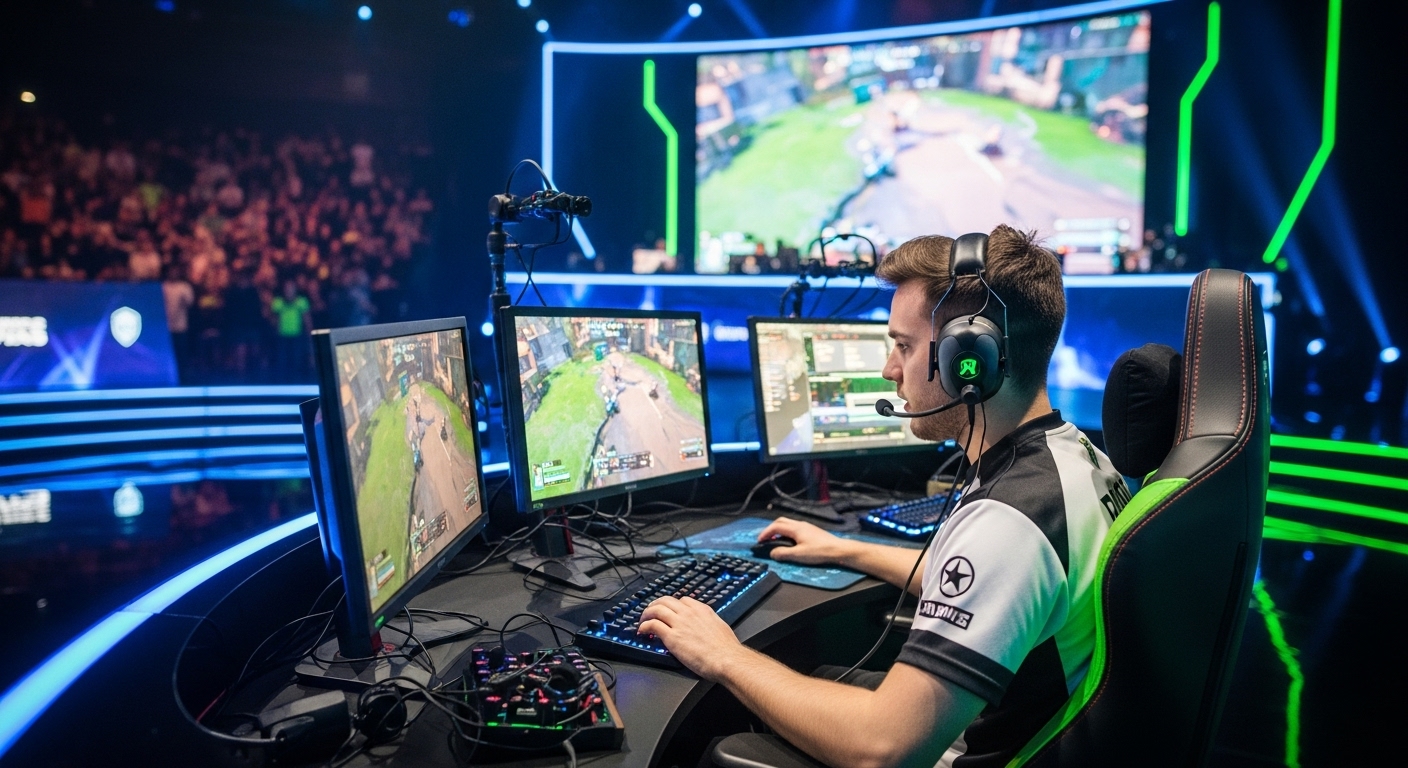
Behind every successful esports team is a group of highly skilled players who treat gaming as a full-time job. These professionals practice for hours every day, study their opponents, review gameplay footage, and follow strict routines. They also work with coaches, strategists, and sometimes even psychologists to stay sharp both mentally and emotionally. The demands are intense, proving that being an esports athlete is far from easy.
The Business Behind the Screens
Esports has become a billion-dollar industry supported by sponsorships, advertising, merchandise, media rights, and live events. Major brands have entered the scene to reach younger audiences, while investors are backing esports organizations as legitimate business ventures. Tournaments now take place in sold-out arenas, and streaming platforms attract millions of viewers for live matches, making esports a major force in digital entertainment.
The Role of Fans and Online Communities
What makes esports truly special is its deeply engaged fanbase. Esports fans don’t just watch—they participate, interact, and build strong online communities. From creating fan art and memes to following their favorite teams on social media, the audience plays a major role in shaping the culture of esports. Community feedback even influences how games evolve, showing a unique two-way relationship between fans and developers.
Education and Career Opportunities in Esports
Esports is now finding its way into classrooms and college campuses. Many universities offer scholarships for esports players, and some have even built esports arenas and training programs. Beyond playing, students can study broadcasting, event management, game design, and marketing, opening up a wide range of career paths in the industry. The idea that gaming can lead to a serious profession is now more real than ever.
Esports Across the Globe
From South Korea to the United States, from Europe to Southeast Asia, esports has a truly global presence. Different regions have their own strengths and communities, but they are all united by the same passion for competition and gaming. Global tournaments bring together diverse cultures, languages, and styles of play, making esports one of the most inclusive forms of modern entertainment.
What Lies Ahead for Esports
The future of esports looks brighter than ever. With advancements in virtual reality, artificial intelligence, and gaming technology, competitive gaming is set to evolve in exciting new directions. As mainstream sports continue to collaborate with esports, and as global events start to include competitive gaming, we may soon see esports on an even bigger stage—perhaps even the Olympics.
Conclusion: More Than Just a Game
Esports is not just about playing video games. It’s about passion, dedication, teamwork, and innovation. It’s a platform where young people can express their skills, find communities, and even build careers. As it continues to grow, esports will keep breaking boundaries and proving that the future of sports is already here—and it’s digital.