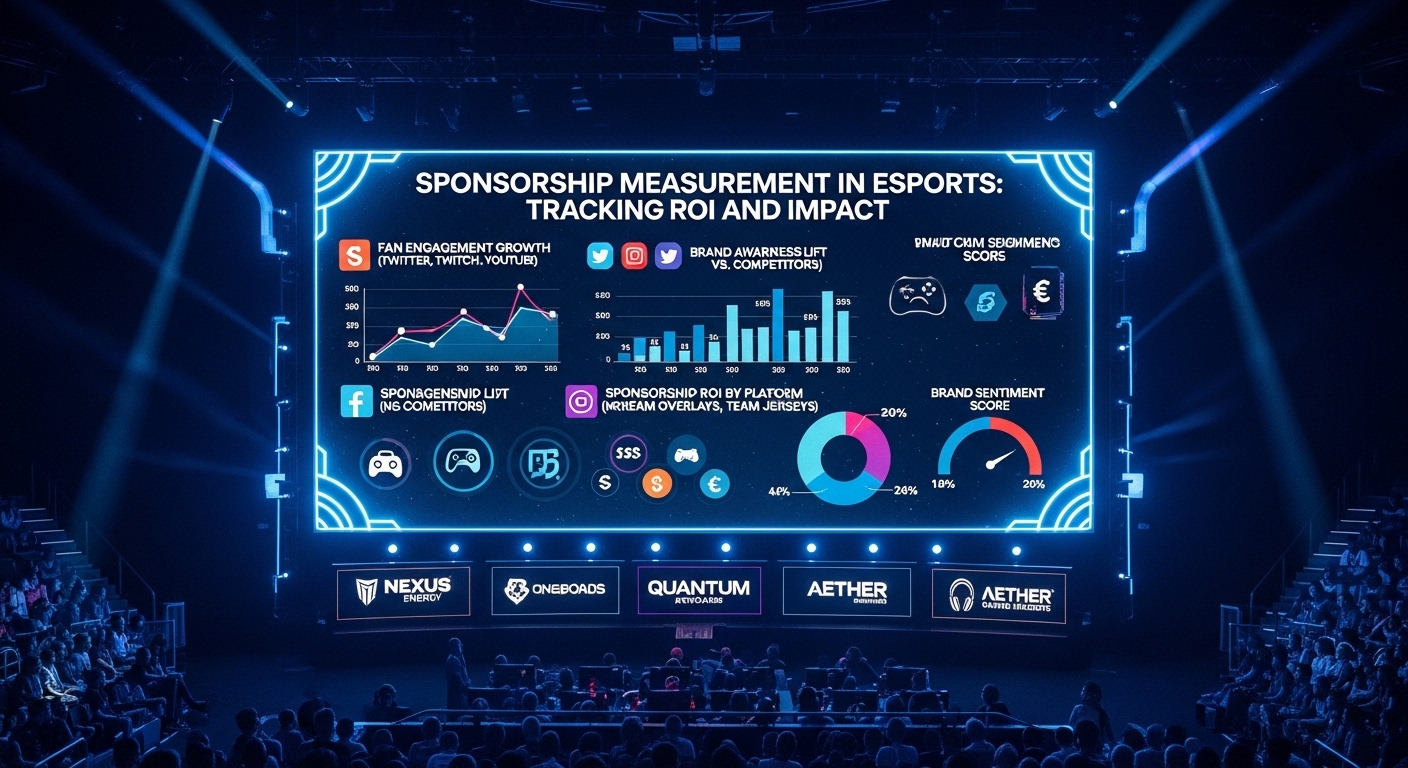
Introduction
Sponsorships are a major revenue driver in esports, but measuring their impact is critical for long-term success. Brands, teams, and organizers need data-driven insights to evaluate return on investment (ROI) and optimize campaigns.
This blog explores methods for measuring esports sponsorship effectiveness, metrics, tools, challenges, and future trends.
Importance of Measuring Sponsorship ROI
- Determines the financial and strategic value of campaigns.
- Helps allocate marketing budgets efficiently.
- Provides insights to improve fan engagement and activation strategies.
- Builds credibility with sponsors and stakeholders.
Key Metrics for Sponsorship Measurement
- Reach and Impressions: Number of fans exposed to branding.
- Engagement Metrics: Likes, shares, comments, and live interactions.
- Conversion Metrics: Merchandise sales, subscriptions, or website traffic driven by sponsorship.
- Brand Sentiment Analysis: Public perception and fan sentiment toward the sponsor.
- Media Value: Calculating equivalent advertising value from exposure.
Tools for Sponsorship Analytics
- Social media analytics platforms (Twitter, Instagram, TikTok insights).
- Streaming platform metrics (Twitch, YouTube Analytics).
- Brand monitoring and sentiment analysis tools (Sprout Social, Brandwatch).
- Custom dashboards integrating tournament, streaming, and social media data.
- AI-powered predictive models for estimating sponsorship impact.
Challenges
- Tracking multi-platform campaigns effectively.
- Measuring intangible benefits like brand awareness or fan loyalty.
- Attribution of outcomes to specific sponsorship activities.
- Adjusting metrics for regional and cultural differences in fan engagement.
Future Trends
- AI-driven dashboards providing real-time sponsorship impact insights.
- Blockchain-based tracking for transparent ROI reporting.
- Integration with fan engagement analytics for holistic measurement.
- Predictive modeling to forecast sponsorship success before campaigns launch.
Conclusion
Sponsorship measurement is critical for maximizing ROI and building long-term partnerships in esports. Data-driven insights, analytics tools, and predictive models allow brands and organizations to optimize their strategies and achieve meaningful impact.