Introduction: The Digital Arena That Changed Entertainment
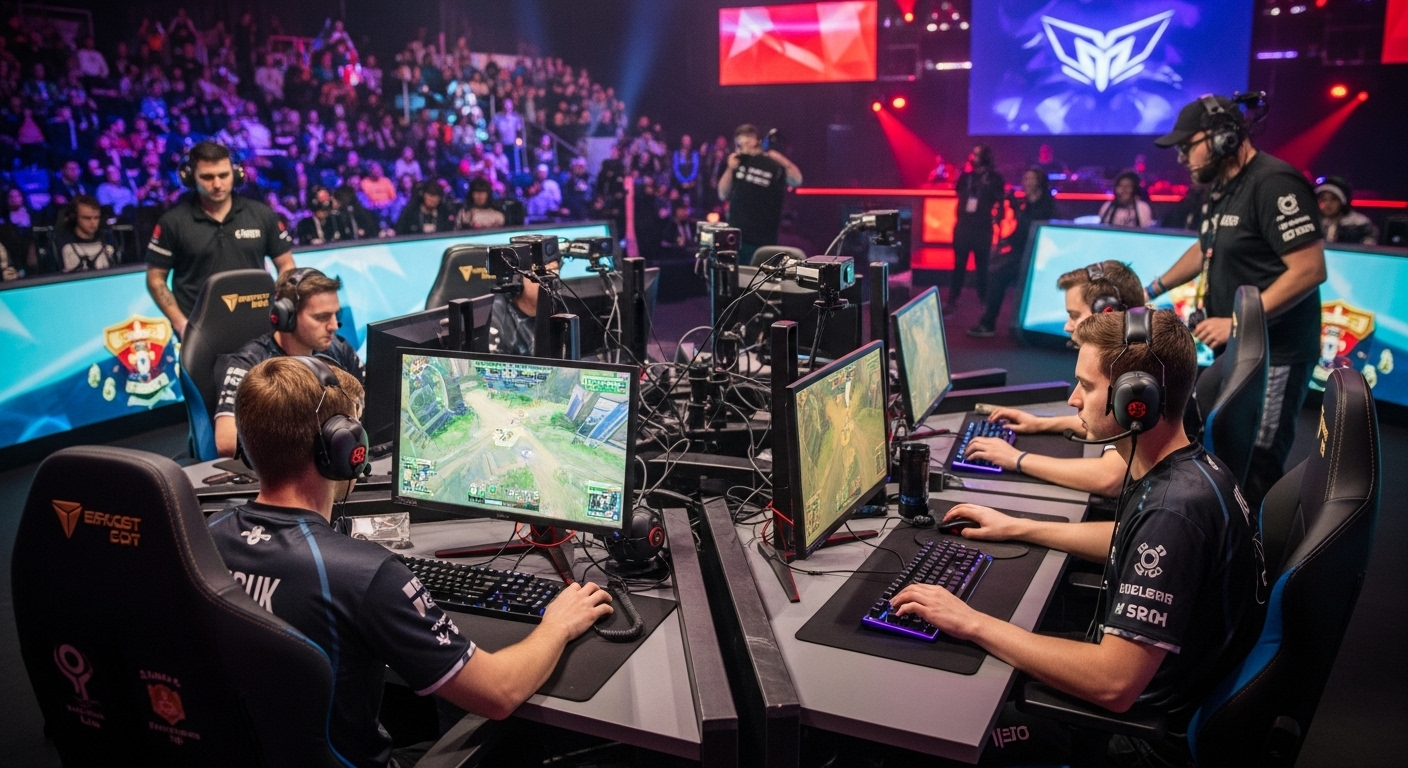
A few decades ago, the idea of professional video game players competing in front of millions seemed almost absurd. Gaming was seen as a pastime, an escape from the real world, or simply a way to unwind after a long day. Yet today, esports — organized, competitive gaming — has become one of the fastest-growing industries in the world. What began as small gatherings of passionate gamers in dimly lit arcades has evolved into a global entertainment powerhouse with packed stadiums, massive prize pools, corporate sponsorships, and millions of viewers online.
Esports is no longer a subculture; it is mainstream. It has transformed the way we perceive competition, entertainment, and even careers. This evolution tells a story not just of technological progress, but of cultural change, generational identity, and the power of digital communities.
The Early Days: Humble Beginnings of Competitive Gaming
The roots of esports can be traced back to the early 1970s, when computer enthusiasts gathered to compete on rudimentary systems. One of the first recorded gaming competitions occurred at Stanford University in 1972, where students played “Spacewar!” for a small prize. Although the event was minor by today’s standards, it symbolized the birth of something new — the idea that digital games could be competitive and communal.
The 1980s saw the rise of arcade gaming, which brought competition into the public sphere. Games like Pac-Man, Donkey Kong, and Street Fighter II turned arcades into battlegrounds where players fought for high scores and local bragging rights. Publications like Twin Galaxies and events such as the National Video Game Championships began to formalize competitive gaming, creating early records and leaderboards.
However, the technology of the time limited the reach of esports. Without online connectivity or large-scale broadcasting, competitions remained local or regional. Still, these early events laid the foundation for what would later become a digital sports revolution.
The Internet Age: Connecting Players and Building Communities
The 1990s marked a turning point. With the growth of personal computers and the advent of the internet, multiplayer gaming began to flourish. Titles like Doom, Quake, and StarCraft introduced online competition to a global audience. Suddenly, players could face opponents from across the world rather than the person next to them at the arcade.
This era also saw the emergence of organized tournaments. The Cyberathlete Professional League (CPL), founded in 1997, and the World Cyber Games (WCG), established in 2000, became the first major international esports events. South Korea, with its rapid internet infrastructure and passionate gaming culture, became the epicenter of early esports. StarCraft tournaments were televised nationally, and players like Lim “BoxeR” Yo-hwan became household names.
These developments gave esports legitimacy. Competitive gaming was no longer just a hobby; it was a professional pursuit with fans, sponsors, and dedicated media coverage. The community-driven spirit of the early internet — forums, LAN parties, and online clans — helped solidify a sense of belonging that still defines esports culture today.
The 2000s: The Birth of Modern Esports
By the early 2000s, esports had taken significant strides toward professionalism. The release of games like Counter-Strike, Warcraft III, and Dota laid the groundwork for team-based, strategic gameplay that appealed to both players and spectators.
In South Korea, the government invested heavily in internet cafés known as PC bangs, which became social hubs for competitive gaming. Major television networks began broadcasting matches, and professional teams received sponsorships from major corporations. In the West, esports started to grow through grassroots efforts and online communities like Major League Gaming (MLG) in North America and DreamHack in Sweden.
While esports was not yet mainstream, it was gaining momentum. Players were beginning to earn a living through prize money and sponsorships, and tournaments attracted crowds that rivaled those of traditional sporting events. However, mainstream media still viewed gaming as a niche interest, and many dismissed esports as a passing trend.
Streaming Revolution: How Twitch Changed Everything
The next great leap in esports came with the rise of live streaming. Platforms like Twitch, YouTube Gaming, and later Facebook Gaming revolutionized how audiences consumed content. For the first time, fans could watch tournaments, scrims, and individual player streams from anywhere in the world, often with live commentary and chat interaction.
Twitch, launched in 2011, became a game-changer. It not only democratized broadcasting — allowing anyone to stream their gameplay — but also made esports events accessible to millions. Viewership numbers skyrocketed, and professional gamers became internet celebrities with loyal fanbases.
Streaming also transformed how sponsors and advertisers approached the industry. Brands that once ignored gaming now saw it as a key avenue to reach younger audiences. As a result, esports prize pools and production values soared, creating a self-sustaining ecosystem of competition, entertainment, and community.
The Rise of Major Esports Titles
Certain games have defined the esports era, each contributing to the industry’s identity and growth.
League of Legends, released in 2009 by Riot Games, is arguably the most influential esports title of all time. With its complex mechanics, strategic depth, and global reach, it became a cornerstone of professional gaming. The annual League of Legends World Championship now draws millions of viewers, comparable to major traditional sporting events.
Dota 2, developed by Valve, built on the legacy of its Warcraft III mod predecessor. Its flagship event, The International, features some of the largest prize pools in esports history — often exceeding tens of millions of dollars — funded through community-driven in-game purchases.
Counter-Strike: Global Offensive continued the legacy of competitive first-person shooters, offering a pure test of reflexes, coordination, and tactical precision. Meanwhile, titles like Overwatch, Fortnite, and Valorant have each brought their own flair to the scene, blending accessibility with high-level competition.
What unites these games is their ability to engage both players and spectators. They are not just games to be played but spectacles to be watched — intricate performances of skill, teamwork, and strategy that captivate global audiences.
The Business of Esports: From Passion to Industry
Today, esports is a multi-billion-dollar industry that spans sponsorships, advertising, merchandise, and media rights. Major corporations such as Intel, Coca-Cola, and Mercedes-Benz have partnered with teams and events, recognizing esports’ marketing power. Investment firms and sports organizations have also entered the space, purchasing teams or founding their own.
Professional esports teams now operate like traditional sports franchises. They have managers, coaches, analysts, and training facilities. Players sign contracts, receive salaries, and follow structured practice schedules. Some organizations, like Team Liquid, Fnatic, and T1, have become globally recognized brands.
The rise of franchised leagues — such as the Overwatch League and the League of Legends Championship Series — has brought further structure and financial stability. These leagues mimic the model of traditional sports leagues, offering consistent scheduling, city-based teams, and long-term investment opportunities.
Yet, while the business of esports has grown immensely, it has also faced challenges. Sustainability, player burnout, and fair compensation remain pressing issues. As the industry continues to mature, balancing profitability with player welfare and community integrity will be key to its long-term success.
The Global Reach of Esports
Esports is not confined to one region or culture. It is a truly global phenomenon that transcends borders and languages. Asia remains a powerhouse, with countries like South Korea, China, and Japan leading in infrastructure and fan engagement. Europe has produced legendary teams and players across multiple games, while North America has become a hub for high-production tournaments and streaming content.
Emerging markets such as Southeast Asia, Latin America, and Africa are experiencing rapid growth, driven by mobile gaming and affordable internet access. Games like Mobile Legends, PUBG Mobile, and Free Fire have introduced millions of new players to competitive gaming, creating regional leagues and international tournaments that attract millions of viewers.
This globalization has also fostered cultural exchange. Esports fans around the world share memes, strategies, and fan art, forming tight-knit communities that exist purely in digital spaces. It’s not uncommon for players from different continents to compete on the same team or for fans to stay up all night to watch international tournaments.
Esports has truly become a shared global language — one spoken through clicks, combos, and cheers.
The Esports Audience: A New Generation of Fans
Unlike traditional sports, which often rely on local loyalty or legacy institutions, esports fandom is born online. Fans follow players, not just teams. They interact with their heroes through social media, streams, and fan events. This accessibility creates a closer, more personal connection between players and their audiences.
Esports fans are typically younger, tech-savvy, and highly engaged. They consume content across multiple platforms — watching live matches, highlight reels, and even behind-the-scenes documentaries. They also play the games themselves, creating a participatory culture where the line between viewer and competitor is blurred.
This interactivity makes esports marketing unique. Brands that understand and respect the culture can form authentic relationships with fans, while those that appear disingenuous are quickly rejected. The community values authenticity, skill, and shared passion above all else.
The Role of Education and Career Development
As esports has gained legitimacy, educational institutions have taken notice. Universities around the world now offer esports scholarships, degree programs, and research initiatives. Students study not only gameplay but also management, marketing, broadcasting, and game design.
Esports provides opportunities beyond playing. Careers in coaching, analytics, production, event management, and journalism have become viable paths. The industry also drives innovation in fields like psychology, nutrition, and physical training, as teams seek every possible advantage for their players.
The professionalization of esports education represents a major step toward long-term sustainability. It ensures that the industry is not just about short-term fame but also about developing future leaders and innovators who will guide its evolution.
Challenges Facing Esports
Despite its success, esports faces significant hurdles. One major concern is player health and burnout. Professional gamers often train for 10 or more hours a day, leading to physical strain, stress, and mental fatigue. Organizations are increasingly hiring psychologists and fitness trainers to help maintain balance, but the culture of overtraining remains difficult to overcome.
Another challenge lies in maintaining fair play. Issues like cheating, match-fixing, and performance-enhancing software have threatened the credibility of certain competitions. Developers and tournament organizers have had to implement strict anti-cheat measures and enforce player codes of conduct to preserve integrity.
Monetization and revenue distribution also remain complex. While major events generate enormous revenue, many players and smaller teams struggle financially. The lack of standardized regulations or global governing bodies means that the esports landscape can be fragmented and unpredictable.
Finally, representation and diversity continue to be ongoing challenges. While the community is global, certain regions, genders, and identities remain underrepresented at the highest levels. Many organizations are now working to make esports more inclusive and accessible to all.
The Pandemic and the Power of the Digital Stage
When the COVID-19 pandemic shut down traditional sports and live events, esports found itself in a unique position. Unlike physical sports, competitive gaming could continue online. Leagues and tournaments quickly adapted, hosting matches remotely while maintaining high production values.
Viewership soared as audiences sought entertainment from home. Esports not only filled the gap left by canceled sports seasons but also attracted new viewers who discovered the excitement of digital competition. The pandemic proved that esports was not just an alternative to traditional sports — it was a resilient and adaptive form of entertainment in its own right.
Even after the world reopened, esports retained its momentum. Hybrid events combining live and online elements became the norm, reaching larger and more diverse audiences than ever before.
The Future of Esports: Innovation and Integration
The future of esports looks bright and boundless. With advancements in technology such as virtual reality, augmented reality, and artificial intelligence, the next generation of competitive gaming could blur the lines between physical and digital experiences.
Franchise stability, improved player welfare, and global regulation are expected to strengthen the industry’s foundation. Esports could also merge more deeply with mainstream media, with events broadcast on major television networks and featured in popular culture.
Another frontier is the integration of esports into traditional sports organizations. Many football, basketball, and baseball clubs have already launched their own esports divisions, recognizing the synergy between the two worlds. This crossover not only expands fan bases but also redefines what it means to be an athlete in the digital age.
Ultimately, the future of esports will depend on how well it balances innovation with community. Its greatest strength has always been its people — the players, fans, creators, and dreamers who built it from the ground up.
Conclusion: A New Era of Competition
Esports has evolved from a niche pastime into a global cultural force. It embodies the spirit of modern competition — digital, diverse, and endlessly creative. What began as friendly contests in college computer labs has grown into an ecosystem that inspires millions and challenges our very definition of sport.
Whether it is the roar of a live crowd during a championship match, the precision of a perfectly executed strategy, or the joy of a streamer connecting with their audience, esports captures the essence of human competition in a digital world. It represents passion, perseverance, and progress.
As technology continues to advance and generations grow up in the digital age, esports will only continue to expand its influence. It stands as proof that the world’s greatest arenas no longer have to be physical — they can exist in pixels, data, and shared dreams.