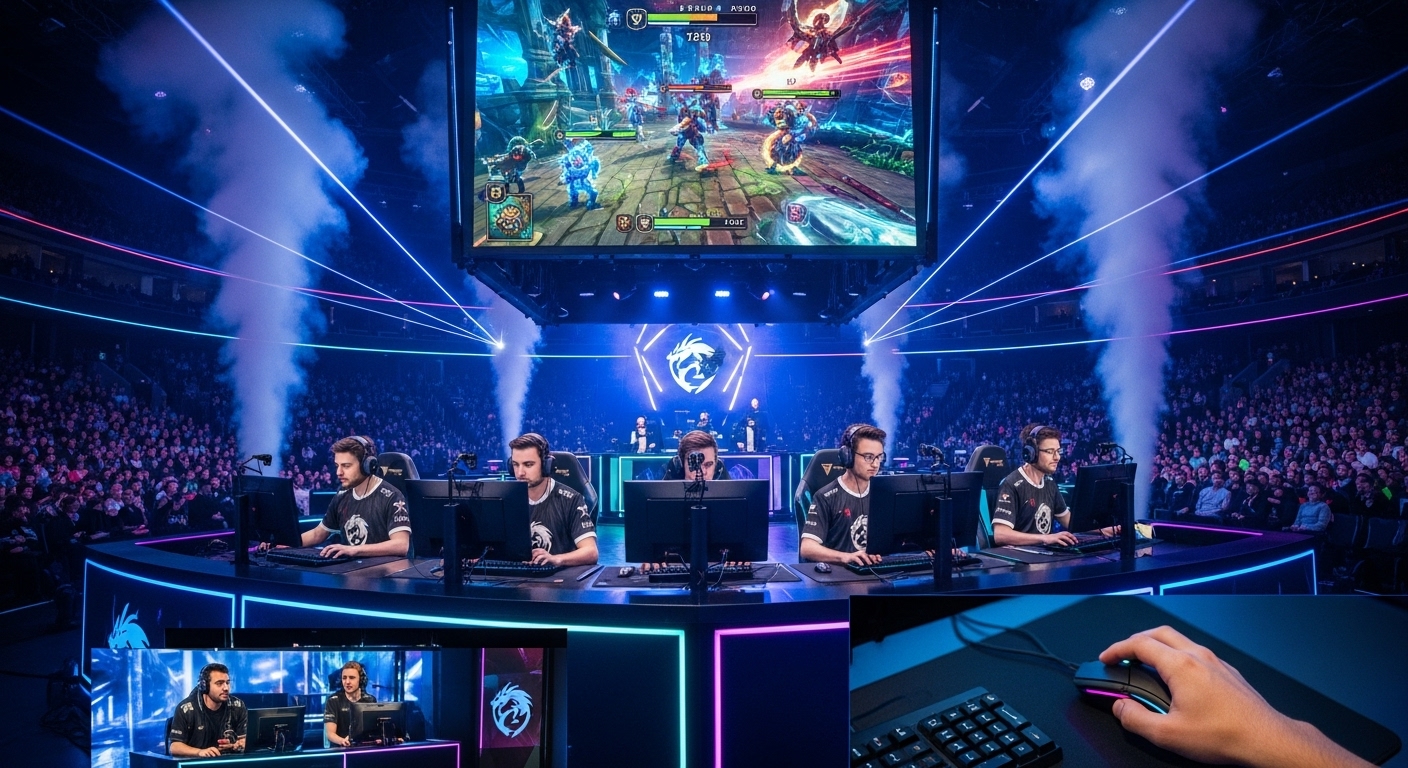
In the last two decades, esports has transformed from a niche hobby into a global powerhouse in the world of entertainment. No longer confined to the basements of avid gamers, esports now fills massive stadiums, attracts millions of viewers online, and offers players multi-million-dollar prize pools. With its increasing visibility and widespread appeal, esports has become a legitimate sport in its own right. In this blog post, we’ll explore how esports evolved from humble beginnings into a thriving industry, what drives its immense popularity, and where it’s headed in the future.
The Birth of Esports: From Casual Gaming to Organized Competition
Esports, or electronic sports, refers to organized, multiplayer video game competitions, often between professional players, teams, or organizations. While video games have existed since the 1970s, competitive gaming in an organized sense began to take form in the late 1990s and early 2000s. The early days of esports were characterized by small, local tournaments where players would gather to compete in games like Quake or StarCraft. These tournaments, while modest in scale, introduced the concept of competitive gaming as a serious, skill-based activity.
As internet speeds improved and online gaming platforms such as Battle.net emerged, competitive gaming became more accessible. Players from around the world could now compete against one another in real-time, leading to the first truly global esports competitions. In the early 2000s, tournaments like The Cyberathlete Professional League and the World Cyber Games provided the framework for what would become the professional esports leagues we know today.
The Professionalization of Esports: Teams, Coaches, and Salaries
As esports grew in popularity, it began to mirror traditional sports in its structure. Professional teams began to form, players signed sponsorship deals, and esports organizations emerged as powerful entities. The formation of teams with dedicated coaching staff, managers, and analysts became a common practice, ensuring that players were maximizing their potential. Just like traditional athletes, esports professionals now had access to coaches who could help them refine their strategies and improve their gameplay.
The introduction of large-scale tournaments with multi-million-dollar prize pools elevated esports to new heights. Games like League of Legends, Dota 2, Counter-Strike: Global Offensive, and Overwatch offered players the chance to compete for significant financial rewards. Players could now earn salaries, participate in sponsorship deals, and travel the world to compete in prestigious events. In many ways, esports players became celebrities, with fans following their every move and celebrating their victories.
The Explosion of Esports Streaming: Bringing the Action to the Fans
One of the defining features of esports’ meteoric rise is its accessibility through live streaming. Platforms like Twitch, YouTube Gaming, and Facebook Gaming have allowed fans to watch live tournaments, interact with players, and become part of the growing esports community. In fact, esports streaming has become so popular that it rivals traditional sports in terms of viewership. For example, the League of Legends World Championship attracts millions of concurrent viewers, and individual streams from top players can reach audiences in the hundreds of thousands.
Live streaming has not only revolutionized the way esports is consumed but has also given rise to new careers. Streamers and content creators who play games and broadcast their experiences to thousands of viewers have turned their passion into a viable profession. Some have even parlayed their success on platforms like Twitch into lucrative sponsorships, partnerships, and brand deals. The interactive nature of streaming allows fans to engage with their favorite players in real-time, building a deeper connection between the players and their communities.
The Business of Esports: Sponsorships, Merchandising, and Brand Partnerships
Esports has become a multi-billion-dollar industry, driven in large part by sponsorships, advertising, and media rights. Major brands, from tech companies to sports apparel giants, are investing heavily in esports to tap into its young, engaged audience. Companies like Intel, Red Bull, Coca-Cola, and Nike have partnered with esports teams, events, and organizations, providing essential funding and elevating the profile of competitive gaming.
Sponsorships have also led to the growth of esports merchandising. Fans now have the option to purchase team jerseys, branded merchandise, and gaming gear, much like they would in traditional sports. Esports teams have become global brands in their own right, with organizations like Cloud9, Team Liquid, and Fnatic building loyal fanbases and offering high-quality gear to their followers. This influx of money has helped to elevate esports from a niche pastime to a global entertainment phenomenon.
In addition to sponsorships, esports events are now being broadcast on major media platforms. Networks like ESPN, Fox Sports, and even cable providers have begun airing esports tournaments, reaching an even wider audience. This has led to an increasing mainstream acceptance of esports, and it is no longer just the hardcore gamers who follow these events—casual viewers are tuning in as well.
Esports in the Mainstream: Celebrities, Schools, and Global Events
Esports has rapidly become a part of mainstream culture. Celebrities, musicians, and even politicians have recognized the power of esports and have begun to invest or show support for the industry. Stars like Drake and Chance the Rapper have endorsed teams or participated in charity events, while famous athletes like Shaquille O’Neal and Michael Jordan have backed esports organizations. The recognition of esports by high-profile figures has only served to further legitimize it as a cultural and entertainment force.
Schools and universities have also jumped on the esports bandwagon. Many educational institutions now offer scholarships for talented gamers, with some even creating dedicated esports programs and facilities. These programs provide students with opportunities to compete at a high level while pursuing a college degree. This trend is helping to further cement esports as an established career path for young people, one that combines passion, skill, and opportunity.
On a global scale, esports is becoming a fixture at major international events. In 2020, The International for Dota 2 became the first esports tournament to surpass a $40 million prize pool, and the League of Legends World Championship regularly attracts global attention. The increasing popularity of these events has led to the creation of dedicated esports arenas and stadiums, such as the Esports Arena in Las Vegas and the LCK Arena in Seoul. These venues provide fans with a chance to experience the excitement of esports live, further enhancing its appeal as a mainstream sport.
The Future of Esports: Innovation, Growth, and Global Expansion
The future of esports looks incredibly bright, with continued growth on the horizon. As technology advances, so too will the esports experience. Virtual reality (VR) and augmented reality (AR) have the potential to completely change how games are played and how tournaments are experienced. VR esports, where players immerse themselves in fully interactive virtual worlds, could be the next major step for competitive gaming.
Furthermore, the expansion of mobile esports is opening new opportunities for players and fans alike. With mobile gaming becoming increasingly popular, games like PUBG Mobile and Free Fire have become staples in the esports world, attracting millions of players and fans globally. This shift will allow esports to reach even more people, particularly in regions where access to high-end gaming PCs or consoles is limited.
The global expansion of esports is also poised to continue, with regions like Latin America, Africa, and Southeast Asia becoming hotbeds for competitive gaming. These regions have a rapidly growing young population that is eager to participate in and follow esports. As internet infrastructure improves in these areas, esports will likely experience explosive growth.
Conclusion: Esports’ Enduring Appeal and Growing Influence
Esports has evolved from a hobby into a global cultural and economic powerhouse. Its rapid rise is a testament to the passion of the gaming community, the investment from brands and media companies, and the increasing mainstream recognition of competitive gaming as a legitimate sport. As esports continues to grow, it will undoubtedly continue to innovate, expand, and inspire new generations of players, fans, and viewers worldwide.
The esports revolution is far from over. With new technologies, evolving player cultures, and a rapidly growing global audience, esports is set to be an integral part of the entertainment landscape for years to come. Whether you’re a hardcore gamer or just someone who enjoys the spectacle of competition, esports is a phenomenon that’s here to stay.