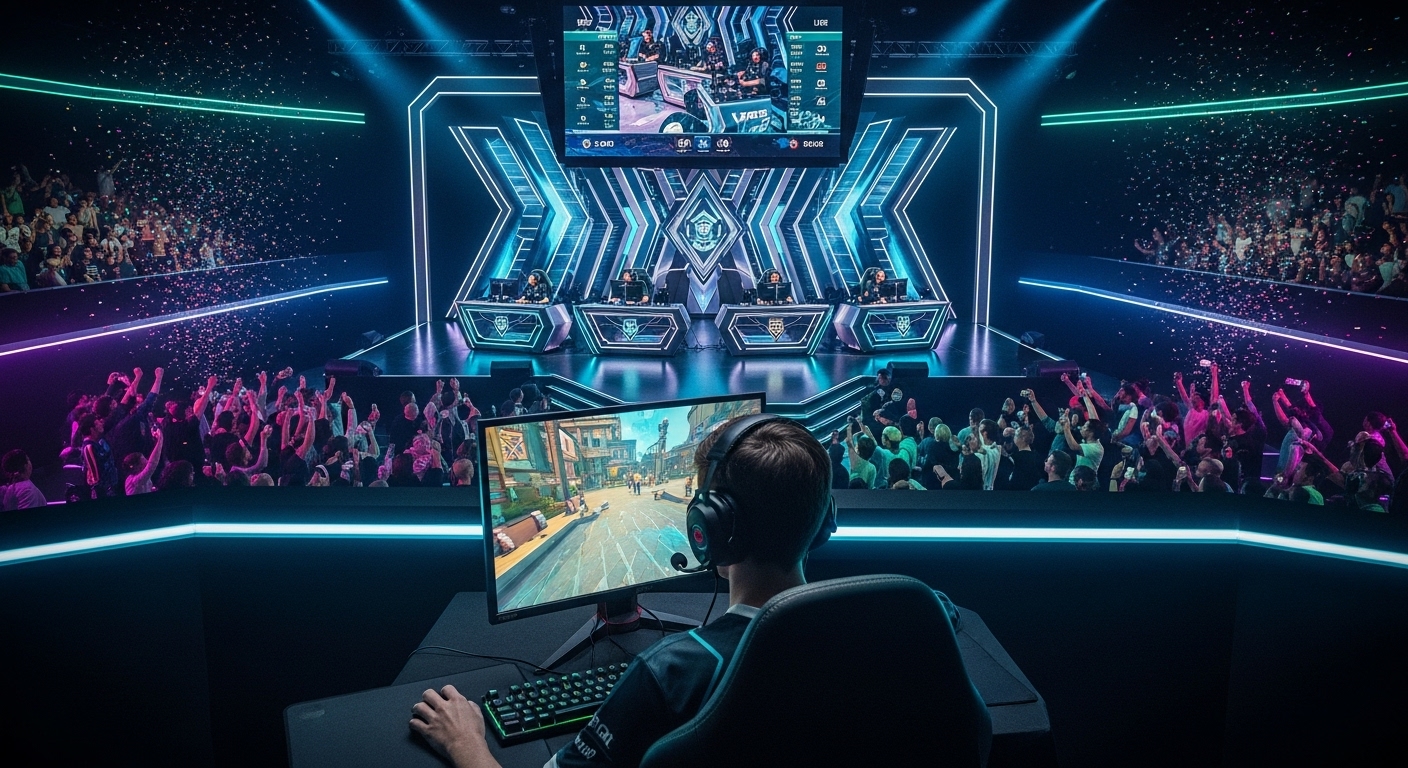
In the last two decades, a remarkable transformation has taken place in the world of entertainment and sports. What once began as a small community of gamers competing in local LAN events has evolved into a multi-billion-dollar global industry known as esports. Today, esports attracts millions of viewers, professional players, corporate sponsors, and a cultural following that rivals traditional sports like football, basketball, and cricket. The growth of competitive gaming is one of the most significant stories of the digital age, showing how technology, entertainment, and community have blended to create something entirely new.
The Early Days of Competitive Gaming
The roots of esports can be traced back to the early 1970s and 1980s when video games were still in their infancy. The first recorded competitive gaming event took place at Stanford University in 1972, where students competed in a game called Spacewar. The prize was modest—a year’s subscription to Rolling Stone magazine—but the event marked the beginning of organized competitive gaming. In the 1980s, arcade games like Pac-Man, Donkey Kong, and Space Invaders became cultural sensations. Arcades turned into informal battlegrounds where players competed for high scores. In 1980, Atari held the Space Invaders Championship, drawing over 10,000 participants across the United States. This was the first large-scale gaming competition, showing that video games could attract mass participation.
The LAN Party Era and Birth of Modern Esports
The 1990s saw the rise of PC gaming and the birth of LAN (Local Area Network) parties. Games like Doom, Quake, and StarCraft allowed players to connect their computers and play together in real time. LAN events quickly grew from small gatherings among friends to large tournaments attracting hundreds of participants. One of the defining moments of this era came in 1997 when the first professional Quake tournament was held—the Red Annihilation tournament—where the winner received John Carmack’s Ferrari as a prize. Around the same time, South Korea began investing heavily in internet infrastructure. The country became a global leader in broadband connectivity, which paved the way for online gaming to flourish. StarCraft became a national obsession in South Korea, and professional players became celebrities, appearing on television and signing sponsorship deals. The concept of esports as a career took shape in this environment.
The 2000s: Online Gaming and Global Expansion
With the rise of broadband internet in the early 2000s, esports began to move beyond LAN parties and local tournaments to online competitions accessible to players worldwide. Games like Counter-Strike, Warcraft III, and Halo became central to the emerging competitive gaming scene. Esports organizations such as Major League Gaming (MLG) in North America, the World Cyber Games (WCG), and the Electronic Sports World Cup (ESWC) provided formal structures for tournaments and professional play. The 2000s also saw the creation of game-specific leagues. Blizzard’s StarCraft: Brood War League and Valve’s Counter-Strike tournaments began drawing significant attention. South Korea’s OnGameNet StarLeague (OSL) was broadcast on national television, while in the West, early streaming platforms and gaming forums started building a global esports community. The foundation for today’s massive esports ecosystem was being laid.
The Emergence of Streaming and the Esports Boom
The single most transformative moment for esports came with the rise of online streaming platforms. Before streaming, watching esports required specialized broadcasts or attending events in person. The launch of Twitch in 2011 changed everything. Twitch allowed anyone to broadcast their gameplay and interact with audiences in real time. Suddenly, esports events could reach millions of viewers globally without traditional TV networks. Games like League of Legends, Dota 2, and Counter-Strike: Global Offensive became massive spectator sports. Developers realized the potential of esports as a marketing and engagement tool. Riot Games invested heavily in the League of Legends Championship Series (LCS), Valve launched The International for Dota 2 with multi-million-dollar prize pools, and Blizzard developed competitive ecosystems for Overwatch and Hearthstone. The 2010s solidified esports as a legitimate entertainment industry.
The Scale of Esports Today
Today, esports is a global industry worth billions of dollars. According to market research, the global esports market has surpassed $2 billion in annual revenue, driven by sponsorships, advertising, ticket sales, and media rights. Major tournaments like The International (Dota 2), the League of Legends World Championship, and the Fortnite World Cup attract viewership numbers that rival or even surpass traditional sporting events. For example, the 2018 League of Legends World Championship drew over 100 million viewers, comparable to the Super Bowl. Professional players earn salaries, sponsorships, and streaming revenue. Esports organizations operate like traditional sports franchises, complete with training facilities, coaches, and analysts. The level of professionalism and structure in modern esports is astonishing, considering how quickly the industry evolved.
The Global Esports Ecosystem
The esports ecosystem includes several interconnected players—game developers, tournament organizers, teams, players, sponsors, streaming platforms, and fans. Game developers such as Riot Games, Valve, Blizzard, and Epic Games play a central role by designing competitive titles and supporting official leagues. Tournament organizers like ESL, Blast Premier, and DreamHack manage large-scale global events, while organizations like FaZe Clan, Team Liquid, and T1 manage professional teams across multiple games. Streaming platforms such as Twitch, YouTube Gaming, and Kick serve as the primary media outlets for esports, broadcasting matches to millions of fans worldwide. Sponsorship is another major pillar of the esports economy. Brands from outside gaming—like Coca-Cola, Intel, BMW, and Nike—have entered the scene to reach younger, tech-savvy audiences. The result is an interconnected global ecosystem blending entertainment, sports, and technology.
The Role of Esports in Popular Culture
Esports is not just about gaming; it has become an integral part of global pop culture. Professional players like Faker, s1mple, and Ninja have achieved celebrity status, with massive social media followings and brand partnerships. Esports tournaments fill arenas such as Madison Square Garden, Staples Center, and Beijing’s Bird’s Nest Stadium. Music, fashion, and film industries have also embraced the esports movement. Artists like Drake and The Weeknd have invested in esports teams, while fashion brands collaborate with gaming organizations for limited-edition apparel. Even the Olympic Committee has acknowledged the rise of esports by hosting esports-focused events and considering inclusion in future Olympic programs. This cultural crossover demonstrates that gaming is no longer niche—it is a mainstream form of entertainment.
Esports and Education
One of the most surprising aspects of esports growth is its entry into education. Universities around the world are now offering esports scholarships, just like those for traditional sports. Programs in game design, esports management, and broadcasting are being added to academic curriculums. Schools recognize that esports fosters valuable skills such as teamwork, strategy, communication, and problem-solving. High schools in the United States, South Korea, and the United Kingdom have even established official esports teams, giving students a chance to compete nationally. This educational integration shows how gaming is being recognized as a legitimate pathway to careers not just in playing but also in game development, event management, and digital media.
The Technology Behind Esports
The technological advancements driving esports are astounding. High-speed internet, low-latency servers, advanced graphics, and gaming hardware all contribute to the seamless competitive experience. Modern gaming PCs, high-refresh monitors, and precision peripherals allow players to perform at their peak. Additionally, virtual production technology and augmented reality enhance live broadcasts, creating visually stunning presentations for audiences. Artificial intelligence is being used to analyze player performance and strategize gameplay. Cloud gaming and 5G connectivity are making competitive gaming more accessible, breaking barriers of geography and hardware limitations. Technology is the backbone of esports, constantly evolving to provide smoother, fairer, and more engaging competition.
The Economic Impact of Esports
The economic footprint of esports extends far beyond gaming. The industry supports thousands of jobs in production, marketing, data analytics, broadcasting, and event management. Cities that host esports tournaments experience tourism boosts, similar to hosting traditional sports events. For example, events like DreamHack and ESL One have attracted tens of thousands of visitors to cities like Katowice, Cologne, and Dallas. Brands see esports as an entry point to younger audiences who consume less traditional media. The advertising and sponsorship opportunities are immense, as esports viewers are highly engaged and interactive compared to passive television audiences. Esports merchandise, from jerseys to gaming peripherals, adds another layer to the economic ecosystem.
Challenges Facing Esports
Despite its success, esports faces several challenges. One of the biggest is sustainability. Unlike traditional sports, esports is tied directly to game publishers, who control the intellectual property. If a developer stops supporting a game, its competitive scene can collapse overnight. Player burnout is another serious issue; professional gamers often retire in their mid-20s due to the intense training schedules and physical strain on hands and eyes. Cheating and match-fixing scandals have occasionally tarnished esports’ reputation. Additionally, regulatory issues vary from country to country, complicating international tournaments. The industry is still maturing, and stakeholders are working to establish standards for player contracts, health, and ethics.
Esports and Gender Diversity
Gender diversity in esports has been a topic of ongoing discussion. While the player base of video games is nearly evenly split between men and women, professional esports remains male-dominated. Barriers such as online harassment, lack of representation, and limited access to resources have hindered female participation. However, change is happening. Organizations and initiatives are being launched to promote inclusivity, such as all-female tournaments and mentorship programs. Prominent female players and streamers are also helping to shift the perception that competitive gaming is only for men. As awareness grows, the future of esports promises greater diversity and equality.
Esports as a Career Path
For many young people, esports is more than just a hobby—it’s a dream career. However, not every player becomes a professional competitor. The esports industry offers a variety of career paths including coaching, game design, event organization, content creation, and broadcasting. Shoutcasters, analysts, and production teams play crucial roles in delivering the esports experience. The demand for skilled professionals in areas like marketing, sponsorship management, and community engagement continues to rise. As esports matures, it is creating new career opportunities similar to those found in traditional sports and entertainment industries.
Esports During the Pandemic
The COVID-19 pandemic in 2020 accelerated the growth of esports even further. While traditional sports leagues were forced to suspend play due to lockdowns, esports adapted quickly to online formats. Tournaments continued without physical venues, and viewership skyrocketed as people sought entertainment from home. Mainstream sports organizations even collaborated with esports platforms—Formula 1 held virtual races with real drivers, and NBA players participated in gaming tournaments. The pandemic demonstrated the resilience and flexibility of esports, solidifying its position in the entertainment landscape.
The Future of Esports
The future of esports looks brighter than ever. As technology continues to advance, virtual reality and augmented reality could bring new immersive forms of competition. Cloud gaming will make esports accessible to people without high-end hardware. Mobile esports, already huge in regions like Southeast Asia and India, will continue to grow. The line between physical and digital sports will blur further as traditional sports organizations invest more heavily in gaming. Esports could soon be recognized alongside conventional sports in schools, colleges, and even the Olympics. The industry’s future will likely emphasize sustainability, inclusivity, and professionalization, ensuring that esports remains a thriving global phenomenon.
Conclusion: The Power of Play
Esports has come a long way from small arcade competitions to packed stadiums and global broadcasts. It represents the power of play in the digital age—how human creativity, competition, and technology can merge to create a new cultural movement. Esports is more than just people playing games; it’s a symbol of a connected world, a new form of storytelling, and a platform for talent and innovation. As it continues to grow, one thing is certain: esports has forever changed how we define sports, entertainment, and community in the twenty-first century.