Introduction
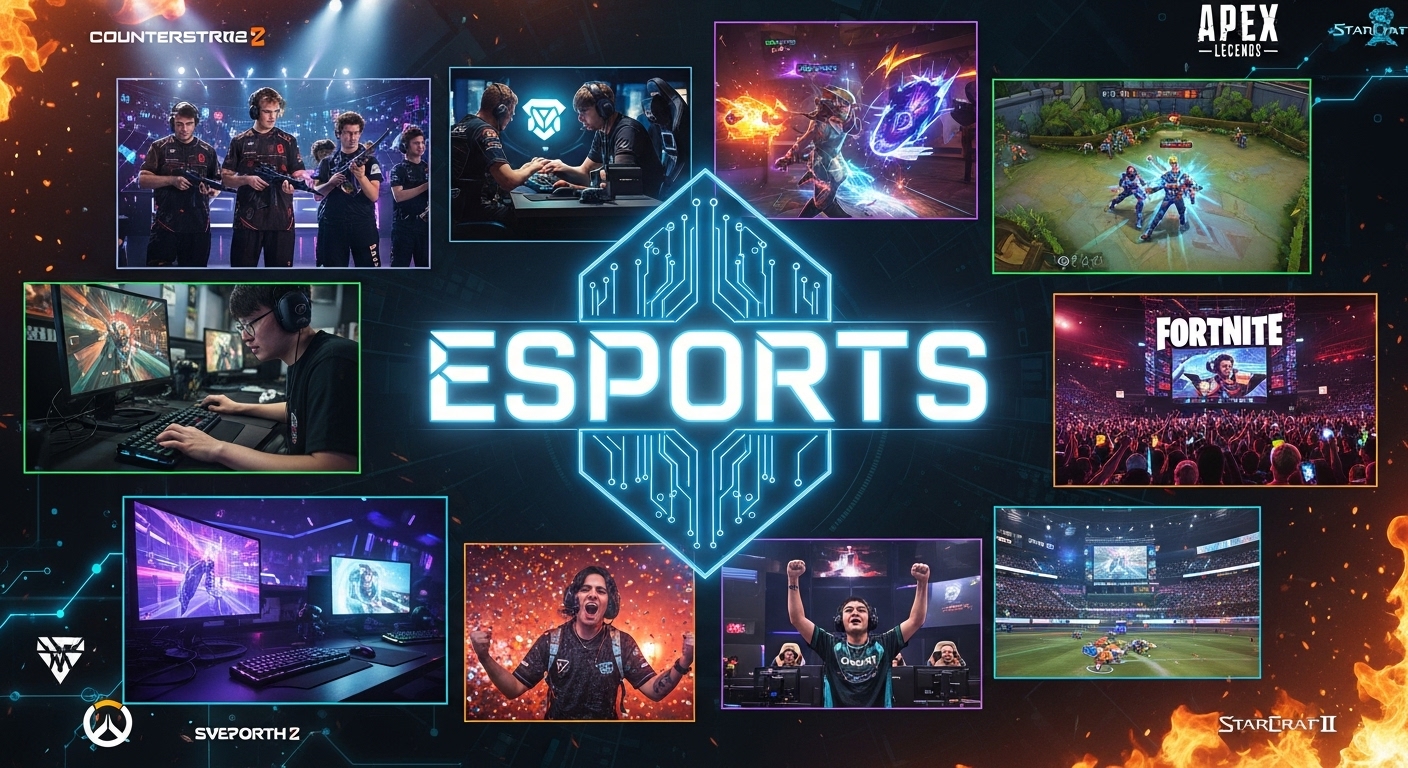
In the past decade, a phenomenon once dismissed as a niche hobby has exploded into a global cultural force. Esports—organized competitive video gaming—has transcended its early roots in arcades and bedroom setups to become a multilayered industry. From stadium-scale events to collegiate scholarships, from sponsorship deals to celebrity endorsements, esports operates at the intersection of technology, entertainment, and sport. In this blog post, we dive deeply into the world of esports: its origins, its structure, the challenges it faces, and what the future might hold.
Origins and Early Growth
From Arcade Tournaments to LAN Parties
The origins of competitive gaming date back decades. In the 1970s and 1980s, arcade machines primed for competition, and players often gathered in arcades to test their skills. Through the 1990s, casual tournaments sprouted around titles like Street Fighter II, Mortal Kombat, and Tekken. These early gatherings were ad hoc, run by fans or small local organizers.
By the late 1990s and early 2000s, localized LAN (Local Area Network) gatherings gained popularity. Gamers would bring their desktops or laptops to a common location, connect via a network, and compete in titles like Quake, Counter-Strike, and StarCraft. These LAN events allowed for controlled, low-latency competition, laying the groundwork for more formalized structures.
The Internet Era and the First Esports Leagues
With the expansion of broadband internet, online multiplayer gaming became viable and widespread. Titles such as Counter-Strike 1.6, Warcraft III, Dota, and StarCraft II ushered in new modes of competitive play. Enthusiast-run ladders, leaderboards, and clan competition flourished.
Formal leagues and tournament organizers began to emerge. Early trailblazers saw the potential of monetizing competitive play: ticket sales, sponsorships, advertising, and broadcasting. The threshold between casual playing and professional gaming blurred as more people viewed esports as not just pastime, but serious endeavor.
The Structure of Esports
Game Genres and Titles
Esports is not monolithic; it comprises multiple genres and game types. Some of the most popular include:
- First-Person Shooters (FPS): Titles such as Counter-Strike, Valorant, and Call of Duty require precision, timing, communication, and map control.
- Real-Time Strategy (RTS): Games like StarCraft II challenge players’ macro and micro decision-making, resource management, and multitasking.
- Multiplayer Online Battle Arena (MOBA): League of Legends, Dota 2, and similar titles involve team-based play, lanes, towers, objectives, and complex interactions.
- Battle Royale / Hero Shooters: Titles such as Fortnite, Apex Legends, Overwatch, and PUBG combine shooting mechanics with survival or team-based elements.
- Fighting Games: Street Fighter, Tekken, Super Smash Bros. series test head-to-head technical skill.
- Sports Simulations and Racing: Titles like FIFA, NBA 2K, Rocket League, and Gran Turismo bring traditional sports into digital realms.
Each genre brings a different community, viewing style, audience demographics, and monetization strategies.
Leagues, Tournaments, and Ecosystems
The competitive ecosystem of esports is built on several layers:
- Local and Regional Tournaments: These are community-level events often run by grassroots organizers, gaming centers, or local publishers. They act as stepping stones for aspiring players.
- National and Continental Leagues: Many major titles operate national circuits or continental leagues feeding into global events. These leagues often have franchise models or open-qualification systems.
- Global Majors and International Championships: These represent the pinnacle of competitive play, with huge prize pools, high production value, and international representation. Winners and top performers are crowned world champions.
- Open Qualifiers and Wildcard Paths: Many tournaments allow teams from outside established circuits to qualify through open brackets or regional qualifiers—this encourages fresh talent and dynamism.
- Academies, Feeder Teams, and Development Structures: Much like in traditional sports, many organizations run junior squads, training programs, or scouting mechanisms to develop future pros.
Stakeholders and Revenue Streams
Esports thrives because multiple stakeholders benefit:
- Teams and Organizations: Professional squads sign player contracts, market their brand, merchandise, stream content, and negotiate sponsorships.
- Players and Influencers: Top pros earn salaries, winnings, brand deals, streaming revenue, and merchandise royalties.
- Event Organizers and Leagues: Responsible for hosting tournaments, producing broadcast-quality content, securing sponsors, selling tickets, and managing logistics.
- Sponsors and Advertisers: Brands tap into esports’ youthful, tech-savvy demographics via sponsorship deals, in-game branding, and media buys.
- Streaming Platforms and Media Rights Holders: Platforms that broadcast tournaments and ongoing content (live, highlights, VODs) sell ad space, subscription models, and monetization.
- Publishers and Developers: Game creators control the rules, release balancing patches, run their own leagues or grant licenses to third-party organizers.
Revenue is generated through a mix of:
- Advertising and sponsorships
- Media rights and broadcasting deals
- Ticket sales and live event merchandise
- In‑game sales and microtransactions (skins, cosmetics, passes)
- Subscriptions and donations on streaming platforms
- Merchandise sales by teams and players
The Culture of Esports
Community and Identity
One hallmark of esports is the passionate, engaged community. Fans identify deeply with teams, players, and regions. They follow every patch note, roster change, and meta shift. They produce content—fan art, streams, analysis, memes. These communities often transcend national boundaries and traditional sports loyalties.
Streaming, Content Creation, and Fan Engagement
Beyond tournaments, much of esports’ energy lies in daily content. Players and teams stream training sessions, scrims, casual games, talk shows, behind-the-scenes, and fan interactions. Platforms like Twitch, YouTube, and region-specific streaming services act as hubs where fans gather, talk, cheer, and complain.
This constant content loop reinforces fandom and keeps audiences engaged even outside tournament windows.
Rivalries, Storylines, and Narratives
In any sport, narratives enrich the experience. In esports, storylines might involve:
- Veteran legends vs. rising rookies
- Underdog teams making deep runs
- National pride or regional dominance
- Meta shifts that upend established hierarchies
- Internal drama: roster sagas, transfers, controversies
These narratives are as compelling as in traditional sports.
Inclusivity, Culture Wars, and Diversity
Esports has made strides in inclusivity: women’s tournaments, mixed-gender teams, accessible streaming tools, and international representation. Yet, challenges persist—gender imbalance, toxic behavior in chat, lack of diversity in leadership, and regional inequality.
Addressing these cultural challenges is key to sustainable growth.
Challenges Facing the Esports Industry
Sustainability and Financial Stability
While the headlines often celebrate massive prize pools—millions of dollars at international tournaments—the underlying financial models are fragile. Relying heavily on sponsors, volatile ad markets, and shifting streamer monetization means many organizations operate on tight margins. Some teams have folded, players have been left unpaid, and event cancellations can ripple financially.
Regulation, Governance, and Standardization
Unlike traditional sports with decades of governance structures, esports lacks a unified regulatory body. Disputes about player contracts, match-fixing, doping (e.g. stimulants), intellectual property, revenue sharing, and broadcasting rights highlight the need for standard oversight mechanisms. Each game often has its own rules, competition organizers, policies, and enforcement—making cross-title or cross-region alignment difficult.
Burnout, Mental Health, and Player Welfare
Competitive performance in esports demands extreme hours of practice, physical strain (repetitive strain injuries, eye stress, hand fatigue), and psychological pressure. Young players may struggle with fame, expectations, criticism, public scrutiny, and job insecurity. Without robust welfare systems, mental health crises and early retirements are frequent.
Infrastructure and Technological Barriers
High-level esports demands top-tier internet connectivity, powerful hardware, robust server infrastructure, and low-latency communication. In regions with weak internet or infrastructure disparities, competitive parity is tough. Ensuring fair ping, server stability, and uniform technical standards across regions remains challenging.
Piracy, Broadcast Protection, and Intellectual Property
Esports broadcasts must be protected against unauthorized streaming, distribution, or replay. Publishers, event organizers, and media partners must enforce copyright, manage broadcasting territories, and prevent revenue leakage. The relationship between publishers and tournament organizers can sometimes be contentious over IP rights, revenue splits, and media control.
Public Perception, Legitimacy, and Cultural Acceptance
Though esports has gained legitimacy in many regions, skepticism still lingers among traditionalists. Some dismiss competitive gaming as frivolous or lacking “real” athletic merit. Overcoming such bias, securing recognition by institutions (like sport federations, academies, or Olympic organizations), and educating audiences about the rigor, training, and strategic depth in esports is an ongoing effort.
Case Studies: Esports Leagues and Success Stories
The International Dota 2 Championships
One of the most iconic esports events, The International (TI) is Dota 2’s annual world championship. Its prize pool is largely crowdfunded via in‑game purchases, often scaling into tens of millions of dollars. This model demonstrates how publisher-community synergy can fuel spectacular events and engagement.
League of Legends Global Events
Riot Games runs structured regional leagues feeding into international tournaments like the Mid‑Season Invitational and World Championship. The franchising approach in many regions (fixed teams rather than relegation) offers stability and allows teams to invest in long-term growth while still maintaining competition.
Overwatch League’s City-Based Model
The Overwatch League attempted to directly transplant traditional sports ideas—city-based franchises, home stadium games, global roster moves—into esports. Though the model faced challenges, it inspired new thinking about global and regional planning in competitive gaming.
Counter‑Strike and the Circuit Model
In Counter‑Strike, top-level competition is organized via a circuit of tournaments with points, seasonal rankings, and pro tours. Rather than centralizing everything, the model encourages multiple trusted tournament organizers to co-exist in a structured competition environment.
How to Break Into Esports: For Players, Organizers, and Fans
For Aspiring Players
- Choose Your Game & Role: Focus on one title and often one position or role (e.g. support, carry, entry fragger).
- Invest in Training & Analysis: Routine scrims, studying replays, learning meta, coaching, physical conditioning.
- Build a Network: Join amateur teams, play in local tournaments, stream your gameplay, make contacts.
- Create a Personal Brand: Stream your journey, produce content, engage with audiences and communities.
- Be Persistent & Patient: Breakthroughs often take years; growth is non-linear and competition is fierce.
For Event Organizers & Promoters
- Be Community‑Centered: Understand local needs, culture, and community interests.
- Prioritize Production Value: High-quality broadcast, audio-visual, staging, commentary, and storytelling differentiate events.
- Secure Sustainable Funding: Diversify revenue sources—sponsorships, media partnerships, ticketing, merchandise.
- Design Clear Formats: Transparent rules, fair qualification paths, community appeal, and consistent scheduling matter.
- Deliver Fan Experience: Engage the audience with side events, meet-and-greets, merchandise booths, cosplay, and fan zones.
For Fans & Content Creators
- Stay Informed & Critical: Follow patches, meta changes, roster swaps, but also think critically about event production, fairness, and integrity.
- Support Creatively: Attend live events when possible, buy team merchandise, contribute to community projects.
- Make Content: Write blogs, produce video analysis, host podcasts, draw art, build fan communities.
- Bridge Gaps: Help connect lesser-known scenes, regions, or games to broader audiences.
The Global Landscape and Regional Differences
Asia and China
Asia (especially China, South Korea, and Southeast Asia) has long been a powerhouse in esports. Deep infrastructure, government recognition, cultural acceptance, and massive player base fuel huge audiences and revenue. Many legendary teams, players, and leagues originate from these regions.
North America
In North America, esports has adopted hybrid models blending franchising, media deals, and traditional sports paradigms. Major cities host teams, content production is polished, and crossover into mainstream entertainment is common.
Europe
Europe showcases a mix of talent, with strong regional leagues (Western Europe, Scandinavia, Eastern Europe). There is also a tradition of grassroots organization, with local LANs that produce standout teams who break into global stages.
Latin America, Middle East, and Africa
These regions represent emergent markets with enormous growth potential. Infrastructure challenges, investment gaps, and visibility are current bottlenecks. Yet passionate communities are rising, local leagues are being founded, and global organizations are starting to invest more heavily there.
Technological Trends Influencing Esports
Cloud Gaming and Remote Competition
Cloud infrastructure increasingly allows games to run remotely with minimal hardware demands. This could lower entry barriers. Additionally, remote competition (players competing from home) became essential during global events (e.g. pandemics), pushing HTML5, server infrastructure, and logistics innovation.
Virtual Reality (VR) and Augmented Reality (AR)
VR and AR open new frontiers: imagine spectator modes where fans can “enter” the game world, or competitive VR titles pushing new types of physicality and immersion. Though still nascent, they suggest possible future esports dimensions.
Enhanced Broadcast Experience via Data & Analytics
Real-time telemetry, overlays, player statistics, heatmaps, and AI-driven analysis enrich broadcasts, helping audiences understand deeper strategy and dynamics. These data layers turn complex games more accessible to casual viewers.
AI and Coaching Tools
Machine learning can assist with scouting, match prediction, training suggestions, and optimizing practice regimens. AI bots, simulation training, and tools to analyze opponents’ tendencies can enhance competitive edge—though questions remain about fairness and regulation.
Crossplay and Cross-Platform Competition
As games become available across multiple platforms (PC, console, mobile), the possibility of crossplay competition arises. Balancing fairness, input differences, and platform parity becomes a technical and design challenge.
Esports and Traditional Sports: Convergence & Contrast
Athleticism vs. Cognitive-Speed
While traditional sports emphasize physical fitness, strength, and endurance, esports emphasizes reflexes, decision cycles, pattern recognition, and coordination. Yet pros often incorporate physical training, nutrition, and wellness routines to maintain performance.
Venue Spectacles and Stadiums
Recent esports events fill large arenas and stadiums, providing live spectator atmospheres akin to traditional sports games. The roar of the crowd, halftime shows, lighting effects—these crossover elements enhance legitimacy and entertainment.
Sponsorship and Media Rights Similarities
Major sports and esports both monetize through media rights, branding, sponsorship, and licensing. As esports continues to grow, it increasingly competes and coexists with traditional sports for eyeballs and ad revenue.
Education, Scholarships, and Institutional Adoption
Universities and colleges have begun offering scholarships for esports athletes, integrating competitive gaming into campus life. Esports clubs, varsity teams, and academic programs (on game design, analytics) further blur the boundary between education and competition.
Predictions: The Future of Esports
Mainstream Normalization and Cultural Integration
Esports will continue integrating into mainstream culture—television coverage, prime-time slots, lifestyle apparel lines, crossover entertainment partnerships. It will no longer be “niche gaming” but simply part of the global sporting ecosystem.
Consolidation and Professionalization
The industry may see consolidation—mergers between event organizers, leagues, and media companies. Operating standards, regulatory bodies, and widely accepted governance structures may emerge to stabilize the competitive environment.
Expanded Frontiers—Education, Health, and Social Impact
We may see esports used in educational settings (teaching teamwork, strategy, STEM skills), health and rehabilitation applications (using gaming for therapy), and social causes (charity tournaments, digital inclusion).
Hybrid Formats and New Game Genres
Expect experimental formats: mixed reality esports, team-versus-AI, cross-genre hybrids, or episodic tournaments tied to game universes. New titles may break genre molds, and cross-platform tournaments may dominate.
Deeper Global Penetration
Emerging markets in Africa, Latin America, South Asia, and the Middle East will become competitive hubs. With improving infrastructure and investment, we will see world-class teams from unexpected places, shifting global balances.
Ethical, Legal, and Welfare Frameworks
To ensure sustainable growth, industry stakeholders will need to codify ethics (anti-doping, fair play), formalize legal frameworks (contracts, employment rights), enforce welfare policies (mental health support, retirement planning), and facilitate fairness across regions.
Conclusion
The story of esports is still being written. What began as humble gatherings of gamers evolved into a dynamic, multifaceted global industry. Esports challenges old definitions of athleticism, competition, and entertainment. It is a domain where milliseconds matter, teamwork is paramount, and strategy blends with reflex. It invites players, fans, creators, entrepreneurs, and dreamers to shape its future.
As technological, cultural, and economic forces continue to intertwine, esports stands at the forefront of 21st-century competition. Whether you’re a player aspiring to go pro, a fan tuning into an intense final, a content creator crafting analysis, or an investor seeing growth potential—the world of esports offers opportunity, risk, and the thrill of a Grand Arena where virtual gladiators rise.