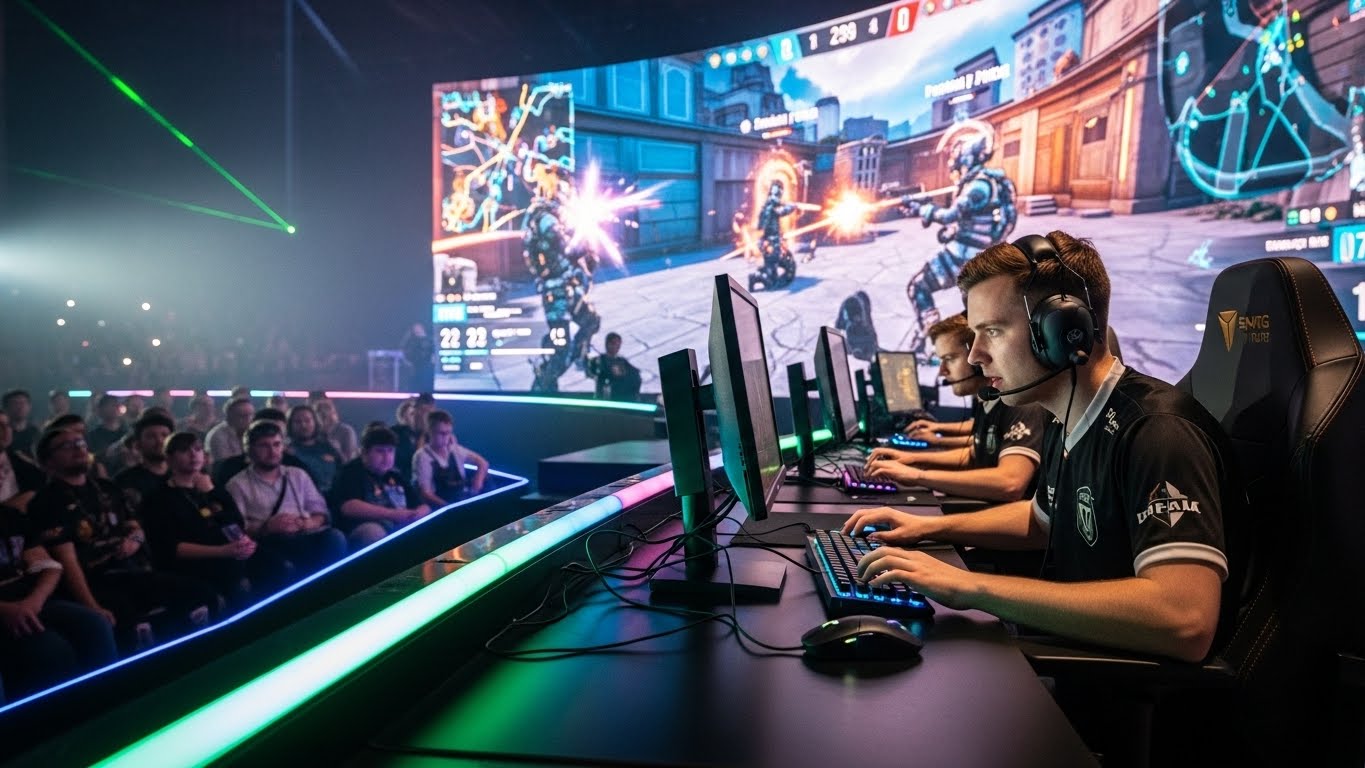
Introduction: The Emergence of a Digital Sport
Esports, or electronic sports, has emerged as one of the most influential and rapidly growing forms of competition in the digital era. Once dismissed as a casual hobby for gamers, it has transformed into a global phenomenon that commands millions of viewers, attracts substantial investment, and offers lucrative professional opportunities. Unlike traditional sports, esports exists entirely in virtual spaces, yet it mirrors the intensity, skill, and teamwork found on conventional playing fields. From strategy-intensive games to fast-paced shooters, esports challenges players both mentally and physically, demanding discipline, strategy, and precision. Its rise illustrates how technology, culture, and entertainment intersect, creating a competitive environment that reaches far beyond conventional definitions of sport.
The Evolution of Esports
Esports has a history that stretches back several decades, evolving from simple arcade competitions to globally recognized tournaments. In the late 1970s and 1980s, gaming competitions were primarily local events held in arcades or small communities. The late 1990s and early 2000s marked a turning point with the advent of multiplayer online games such as StarCraft, Counter-Strike, and Warcraft III, which facilitated broader competition and community engagement. The introduction of online streaming platforms allowed fans to watch live matches in real time, rapidly expanding esports’ global reach. Today, international tournaments like the League of Legends World Championship, Dota 2’s The International, and the Fortnite World Cup draw millions of viewers, offer multi-million-dollar prize pools, and are celebrated as major sporting events. This evolution demonstrates how esports has transitioned from a niche pastime to a professional, globally recognized industry.
The Popularity of Esports
The popularity of esports can be attributed to accessibility, diversity, and community engagement. Unlike traditional sports, esports requires minimal physical infrastructure, making it accessible to anyone with a computer, console, or internet connection. The wide variety of game genres caters to different interests, from strategic thinking and teamwork to fast reflexes and problem-solving skills. Online platforms allow players and fans to interact, share strategies, and participate in tournaments, fostering a strong sense of community. Esports also transcends age, gender, and geography, creating a global fanbase that rivals traditional sports audiences. Its rise highlights the cultural and social significance of digital competition in the modern era.
Physical and Mental Demands of Esports
Although esports does not involve conventional athletic exertion, it requires considerable physical and mental discipline. Professional players often train for several hours daily to enhance reflexes, accuracy, and strategic thinking. Hand-eye coordination, multitasking, and rapid decision-making are essential for success in high-level competitions. Mental resilience is equally crucial, as players must cope with intense pressure, adapt to evolving gameplay, and manage stress from public scrutiny and competitive expectations. Nutrition, sleep, and physical exercise are increasingly recognized as important for esports athletes, as overall well-being directly impacts focus, reaction time, and endurance. These demands highlight that esports is a serious discipline, requiring commitment and preparation similar to traditional sports.
Teamwork and Strategy in Esports
Team-based esports games emphasize collaboration, communication, and strategic thinking. Titles like League of Legends, Dota 2, and Overwatch require players to coordinate actions, manage resources, and execute plans under time-sensitive conditions. Successful teams demonstrate trust, leadership, and adaptability, which are essential for winning high-stakes competitions. Even in individual-centric games, professional players work closely with coaches, analysts, and support staff to optimize performance and devise strategies. The emphasis on teamwork and planning mirrors traditional sports dynamics, teaching valuable skills that extend beyond gaming, including conflict resolution, leadership, and collaborative problem-solving. Esports demonstrates that digital competition can cultivate meaningful skills applicable to life, career, and education.
Economic Impact of Esports
Esports has grown into a multi-billion-dollar industry, generating income through tournaments, sponsorships, advertising, merchandising, and streaming platforms. Professional players can earn significant salaries, tournament winnings, and endorsement deals, while content creators monetize their influence through streaming and social media. Esports organizations operate similarly to professional sports franchises, employing managers, coaches, analysts, and marketing teams to optimize performance and audience engagement. Large-scale tournaments also stimulate local economies by attracting visitors, creating jobs, and increasing tourism revenue. The economic impact of esports illustrates its legitimacy as a professional industry with long-term growth potential and global relevance.
Esports as a Career Path
Esports provides diverse career opportunities, including professional players, coaches, analysts, commentators, event organizers, and content creators. Professional players often begin by participating in grassroots competitions or online platforms before joining professional teams or leagues. Coaches and analysts utilize data analytics and strategic insights to improve performance, while commentators provide live analysis and entertainment for audiences. Content creators engage communities through streaming, tutorials, and interactive content. Careers in esports require dedication, adaptability, and continuous skill development, reflecting the dynamic nature of the industry. As mainstream recognition grows, esports careers are becoming increasingly viable and respected.
Esports in Education
Educational institutions are increasingly embracing esports as a tool for skill development, engagement, and career preparation. Schools and universities have established esports programs, teams, and scholarships, enabling students to compete and develop skills in strategy, communication, and teamwork. Participation in esports can also complement academic learning, providing transferable skills relevant to business, technology, and media industries. By integrating esports into formal education, institutions acknowledge the legitimacy of competitive gaming while preparing students for diverse career paths. Educational esports programs also foster community, mentorship, and personal growth, highlighting the broader societal value of digital competition.
Cultural Significance of Esports
Esports has evolved into a cultural phenomenon, influencing media, entertainment, fashion, and social interaction. Tournaments attract global attention, with audiences celebrating players, teams, and digital achievements. Communities form around games, creating shared experiences, fan art, cosplay, and online engagement. Esports also promotes inclusivity and diversity, offering opportunities for women and underrepresented groups to participate and excel. The cultural impact of esports lies in its ability to bring people together, inspire creativity, and shape modern entertainment trends. It demonstrates how digital platforms can foster meaningful connections and influence global culture.
Technology Driving Esports
The growth of esports is inseparable from technological advancements. High-speed internet, advanced gaming hardware, and sophisticated software have created the foundation for competitive digital gaming. Emerging technologies such as virtual reality, augmented reality, and artificial intelligence are enhancing gameplay, training, and spectator experiences. Data analytics enables teams to assess performance, track progress, and devise strategies. Technology also expands accessibility, allowing players from remote regions to compete and fans to watch events worldwide. The integration of technology demonstrates how esports represents the convergence of innovation, entertainment, and competitive spirit.
Challenges Facing Esports
Despite its success, esports faces several challenges. Player health, including burnout, mental stress, and physical strain, is a growing concern. Ethical issues such as cheating, doping, and gambling require effective regulation. Gender disparities and limited representation of women and minorities remain pressing issues within the industry. Rapid commercialization also risks prioritizing profit over player welfare and community development. Addressing these challenges is essential to ensure sustainable growth, fairness, and inclusivity in esports, allowing it to maintain credibility as a professional and cultural phenomenon.
The Future of Esports
The future of esports promises further expansion, innovation, and mainstream recognition. Global interest continues to grow, while sponsorships and investments increase the scale and reach of competitions. Emerging technologies like augmented reality, virtual reality, and artificial intelligence are expected to enhance gameplay and viewing experiences. Esports may also play a role in education, professional development, and community engagement, providing new opportunities for growth and innovation. As society continues to embrace digital culture, esports is poised to remain a defining element of entertainment, technology, and global competition for decades to come.
Conclusion: Beyond Gaming
Esports has transcended its origins as a hobby to become a legitimate, organized, and globally recognized form of competition. It combines skill, strategy, teamwork, and technology to create experiences that rival traditional sports in intensity, entertainment, and economic impact. Beyond the competitions themselves, esports promotes personal growth, career opportunities, cultural engagement, and technological innovation. It teaches discipline, collaboration, resilience, and creativity, demonstrating that digital competition can shape lives meaningfully. As esports continues to grow, it is set to redefine the way society views competition, entertainment, and human potential, proving that the future of sport extends far beyond physical arenas.