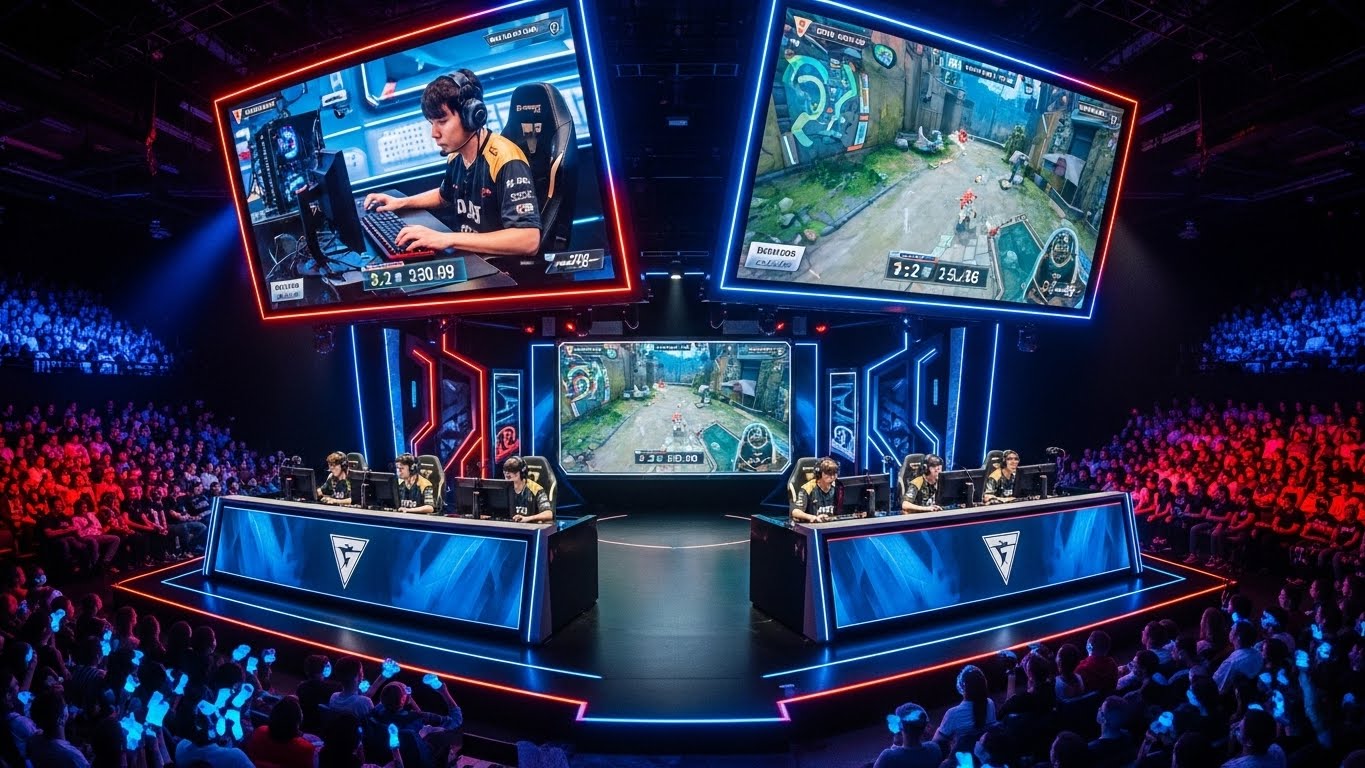
Esports, short for electronic sports, has transformed from a niche hobby into a global cultural and economic powerhouse. What started as casual gaming in local LAN tournaments has now evolved into a multi-billion dollar industry, attracting millions of viewers, huge sponsorships, and top-tier athletes. As we look at the evolution of esports, it’s essential to examine its rise, the dynamics of the gaming community, the professionalization of the industry, and the future that lies ahead.
The Early Days of Esports: A Hobby for the Passionate
The journey of esports can be traced back to the early days of video games. In the 1970s and 1980s, video games like Pong, Space Invaders, and Pac-Man sparked interest among the masses. However, it wasn’t until the early 1990s that competitive gaming began to take shape.
At that time, local tournaments for games like Doom and Street Fighter II were small-scale events, but they marked the beginning of something much larger. It wasn’t about huge prize money or massive sponsorship deals; it was about bragging rights, the thrill of competition, and bringing together a community of gamers who shared a common passion.
The first major esports tournament was held in 1997 with the creation of the Red Annihilation tournament for Quake. This event is often considered one of the earliest milestones in competitive gaming. It was a significant step toward establishing esports as a legitimate form of competition, and players competed for both glory and a car, highlighting the early days where prizes were a combination of material rewards and personal achievement.
The Rise of Online Gaming and Streaming
In the late 1990s and early 2000s, as internet access expanded and bandwidth improved, online gaming became a significant driving force for the esports industry. Games like StarCraft and Warcraft III became popular in competitive circles. These games’ strategic depth allowed for both local and online tournaments, which opened the door for wider participation.
However, it was the introduction of League of Legends in 2009 that truly set the stage for esports to explode into mainstream culture. Riot Games, the creators of League of Legends, laid the foundation for a professional esports league, with a regular schedule, top-tier teams, and a substantial prize pool. This model became the blueprint for the future of competitive gaming.
As gaming became more accessible, the advent of streaming platforms like Twitch (launched in 2011) revolutionized how fans consumed content. Previously, esports fans would have to watch tournaments on television or in person, but now they could watch events live, interact with players, and enjoy commentary—all from the comfort of their homes. Twitch provided a direct connection between players and fans, significantly boosting the visibility of esports and making it more mainstream.
The Professionalization of Esports
As the viewership and participation in esports grew, so did the need for structure, organization, and professionalism. In the past, tournaments were primarily community-driven and amateur-run, but with the influx of sponsorship money, broadcasting deals, and corporate involvement, the industry quickly became professionalized.
The concept of esports organizations (teams and leagues) took off in the early 2010s. Organizations such as Team Liquid, Cloud9, Fnatic, and T1 became household names in competitive gaming. Players began to sign multi-year contracts, receive salaries, and benefit from a range of support services, including coaching, health management, and media training. Esports athletes now had the same perks as traditional athletes, elevating the status of players and the sport itself.
The rise of esports also saw the creation of global leagues and tournaments. One of the most prominent examples is The International, the annual Dota 2 tournament, which regularly boasts multi-million dollar prize pools and draws in millions of viewers. Similarly, the Overwatch League and Call of Duty League introduced city-based franchise models, similar to those of traditional sports leagues like the NFL or NBA. These leagues have attracted big-name sponsors, advertisers, and even celebrity ownership, further validating esports as a legitimate industry.
The Cultural Impact of Esports
Esports is not just a competitive pursuit; it has become a global culture. The gaming community, fueled by social media, has created an ecosystem that allows fans to connect with players, content creators, and other enthusiasts on a global scale. This sense of community, along with the unique personalities of esports athletes, has played a crucial role in the industry’s rapid growth.
Unlike traditional sports, where fans tend to support teams based on geographic location, esports fans often follow individual players or teams based on their playstyle, personalities, or success in particular games. The rise of streaming and social media platforms like YouTube and Twitter has allowed fans to engage with their favorite players in a more personal way than ever before. It has created a new type of celebrity, where gamers and streamers like Ninja, Shroud, and Pokimane have amassed millions of followers and become influencers with the ability to shape gaming culture.
Moreover, the visibility of esports has helped break down traditional barriers around gaming. While gaming was once seen as a hobby for a specific demographic (mostly young males), esports has expanded into a more inclusive and diverse space. Women, people of all ages, and individuals from various cultural backgrounds are now contributing to the esports ecosystem as both players and fans, contributing to a rich and varied community.
Esports and the Global Economy
The economic impact of esports cannot be overstated. With a global audience that numbers in the hundreds of millions, the esports industry generates billions of dollars annually. According to recent estimates, the global esports market is expected to surpass $1.5 billion in revenue by 2025.
A significant portion of this revenue comes from sponsorships and advertising. Major brands, including Coca-Cola, Intel, and Nike, have entered the esports space, offering sponsorship deals and running ads during tournaments. These partnerships are valuable not just for the exposure they bring, but also because esports events reach a highly engaged, tech-savvy audience—making them an attractive avenue for brands to market their products.
Merchandising, ticket sales, and broadcasting rights are also crucial revenue streams. As esports leagues and tournaments continue to grow, the demand for live event tickets and exclusive content has spiked. Esports has even begun to attract investments from traditional sports franchises. In 2017, the Philadelphia 76ers of the NBA acquired Team Dignitas, signaling the increasing crossover between traditional sports and esports.
The growing presence of esports in the mainstream has led to new career opportunities beyond just being a player. Coaches, analysts, content creators, event organizers, and other professionals are in demand. The skills developed through esports—teamwork, communication, strategy, and adaptability—are increasingly valued in industries outside of gaming, which gives the industry an even greater economic impact.
The Future of Esports: Challenges and Opportunities
While the growth of esports shows no signs of slowing down, the industry still faces several challenges. The issue of player burnout is one that has received significant attention. Esports athletes often train for hours on end, and the mental and physical toll of the intense competition can lead to burnout. As the industry matures, better systems for player welfare, including mental health support, better working conditions, and career longevity planning, will become essential.
Another challenge lies in the regulation and governance of esports. While organizations and leagues have put structure in place, there are still questions surrounding player contracts, intellectual property rights, and the integrity of competitions. As the industry continues to grow, it will need to address these issues to ensure fair play and sustainability.
One of the most exciting opportunities for esports lies in its integration with virtual reality (VR), augmented reality (AR), and artificial intelligence (AI). The introduction of these technologies could create even more immersive and engaging experiences for fans and players alike. Esports could evolve into a highly interactive, 360-degree experience that transcends current gaming conventions.
Finally, the global expansion of esports remains an opportunity. While esports is already huge in North America, Europe, and parts of Asia, other regions like South America, the Middle East, and Africa represent untapped markets. As internet infrastructure improves worldwide and mobile gaming grows in popularity, esports has the potential to become a truly global phenomenon.
Conclusion: Esports as a Mainstream Entertainment Form
Esports is no longer just a pastime for a select group of gamers. It has evolved into a cultural and economic force that is shaping the future of entertainment. From its humble beginnings in basement LAN tournaments to the multi-billion-dollar industry it is today, esports has undergone an incredible transformation.
With a dedicated fanbase, professionalized leagues, and a booming global economy, esports has established itself as a mainstream entertainment option, on par with traditional sports in many ways. As the industry continues to grow, it will undoubtedly face challenges, but it is poised for an even brighter future. Whether you’re a casual gamer, a competitive player, or an esports enthusiast, one thing is clear: the age of esports is just beginning.